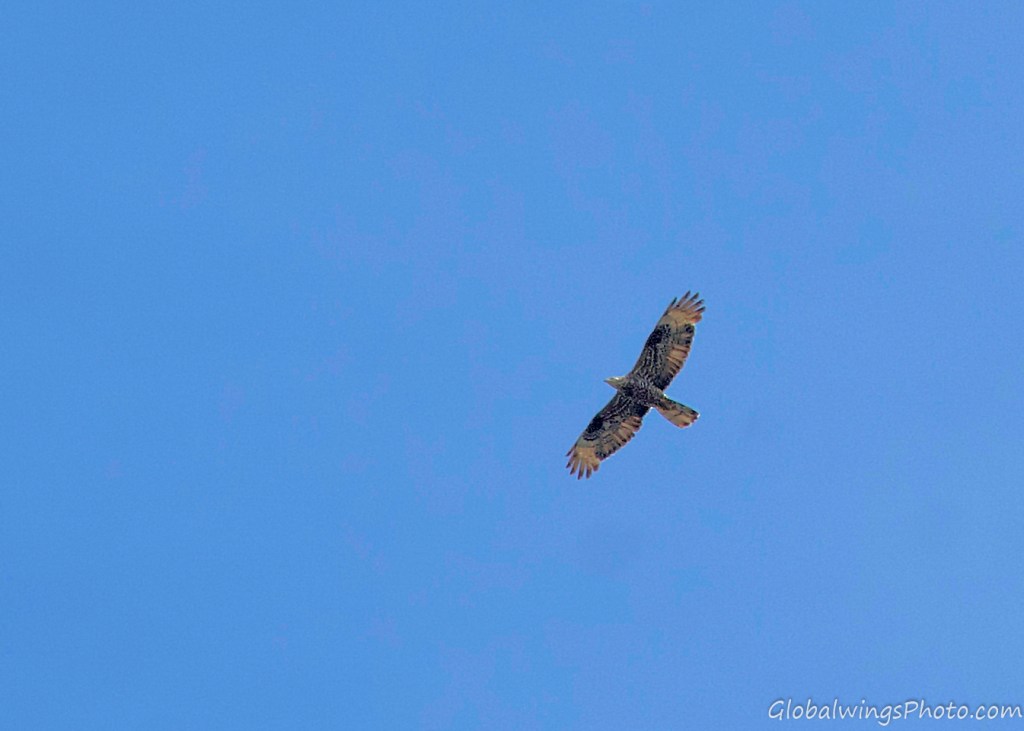
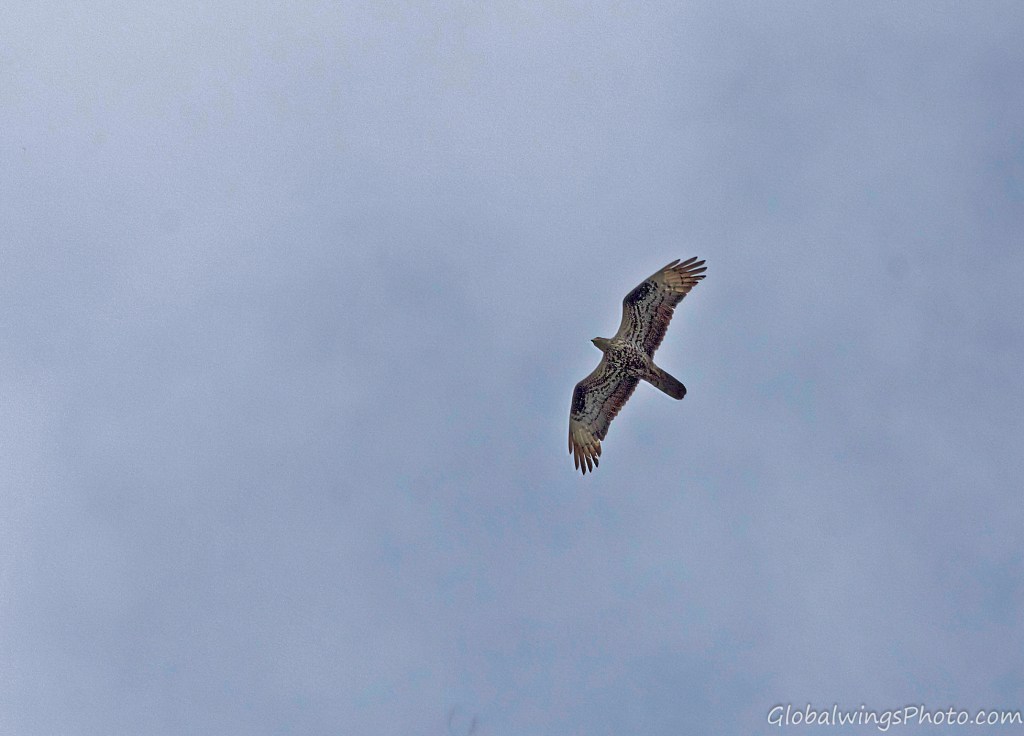
At the end of August and beginning of September, many European honey buzzards migrate over the Falsterbo peninsula, situated in South-western Sweden. However, the number of these migrating birds are much less today than previously, for example compared to the beginning of the 1970’s, when I visited the peninsula for the first time. Still, the stream of migrants can be spectacular, especially when most of the autumn’s migration is concentrated to a few days. The photos on this page are taken on two such days, when many European honey buzzards passed during a few hours in mid-day. This stream of migrating buzzards is illustrated in Photos 1-5. I used this opportunity to take photos of the colour variation of the passing birds’ plumages, a variation that is mainly illustrated in Photos 4-5. Photo 4 shows two males (1 light morph and 1 dark morph) and three females (1 dark and 3 intermediate morphs). All three male morphs are represented on Photo 5: 2 dark, 5 intermediate and 5 light morphs.
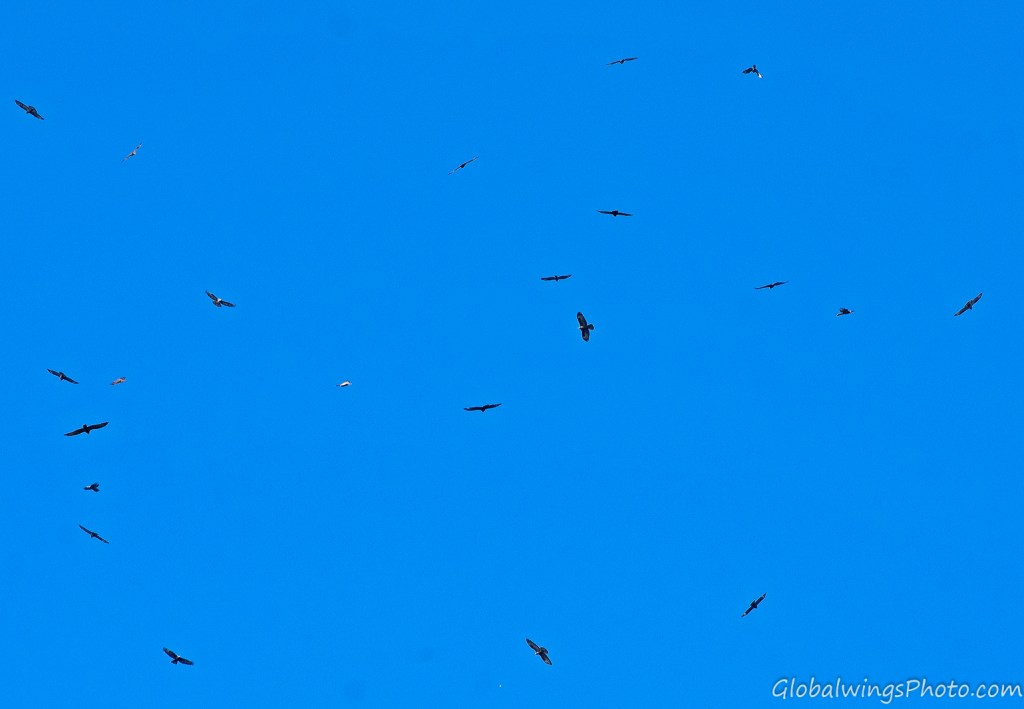
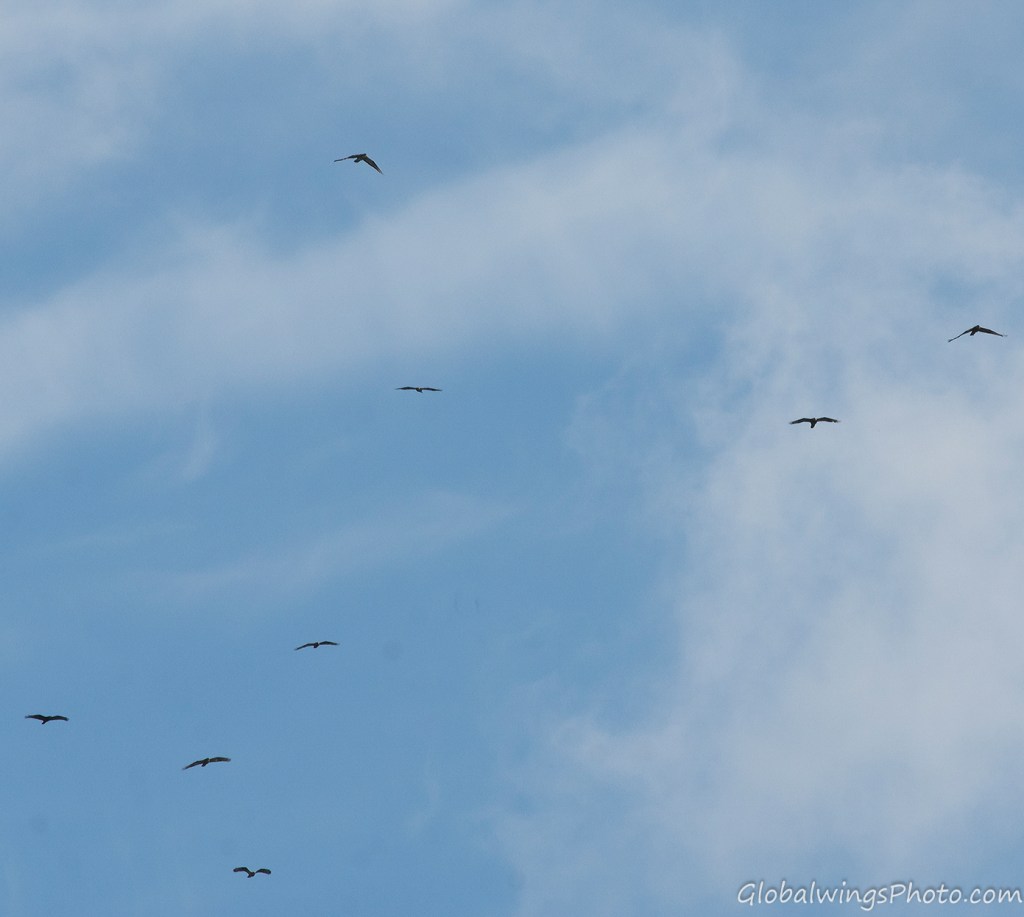
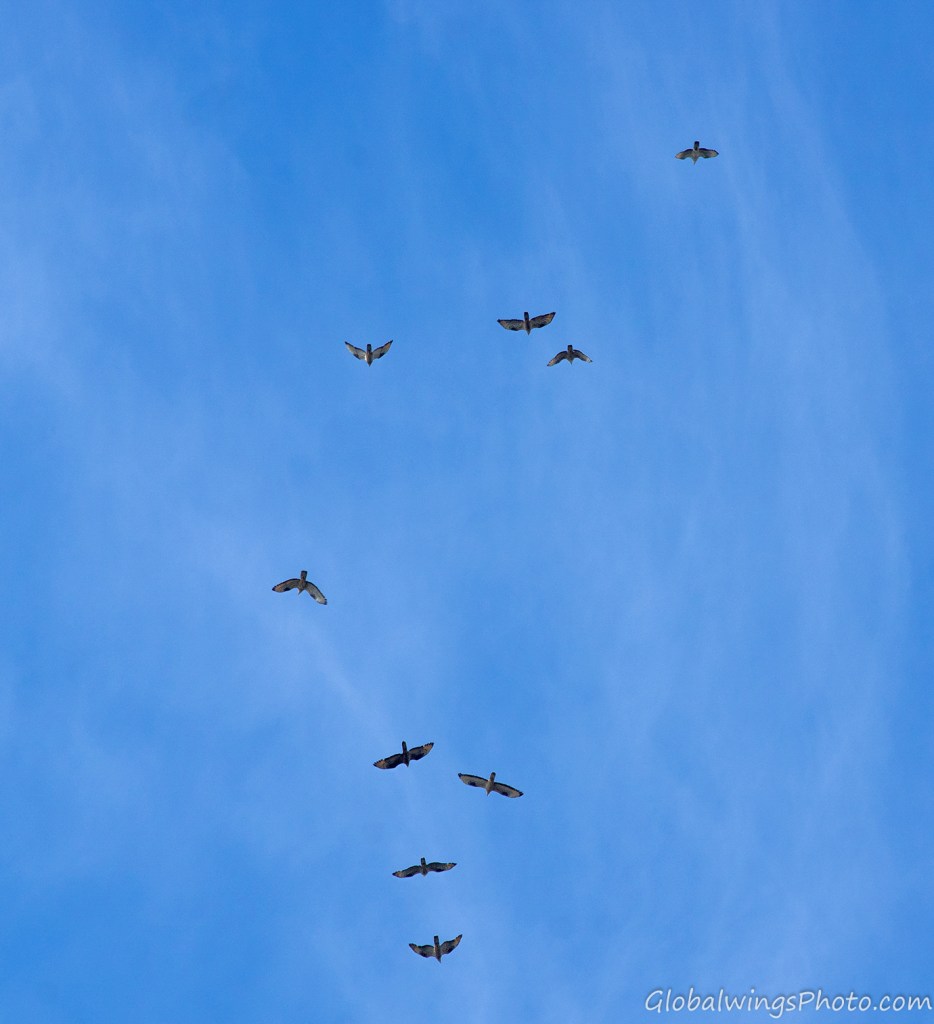
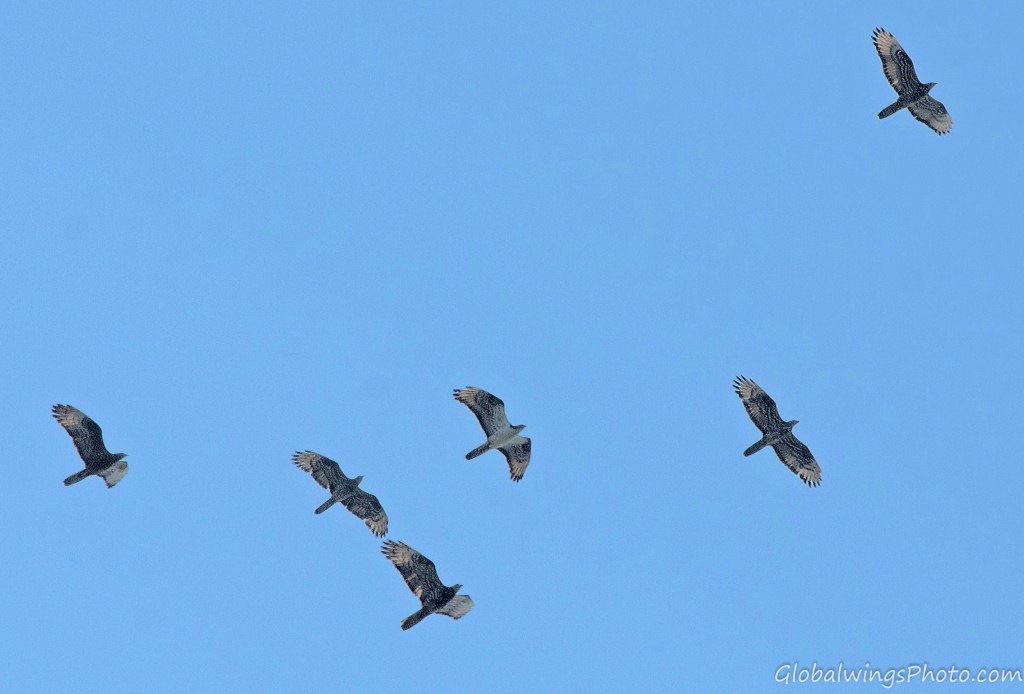
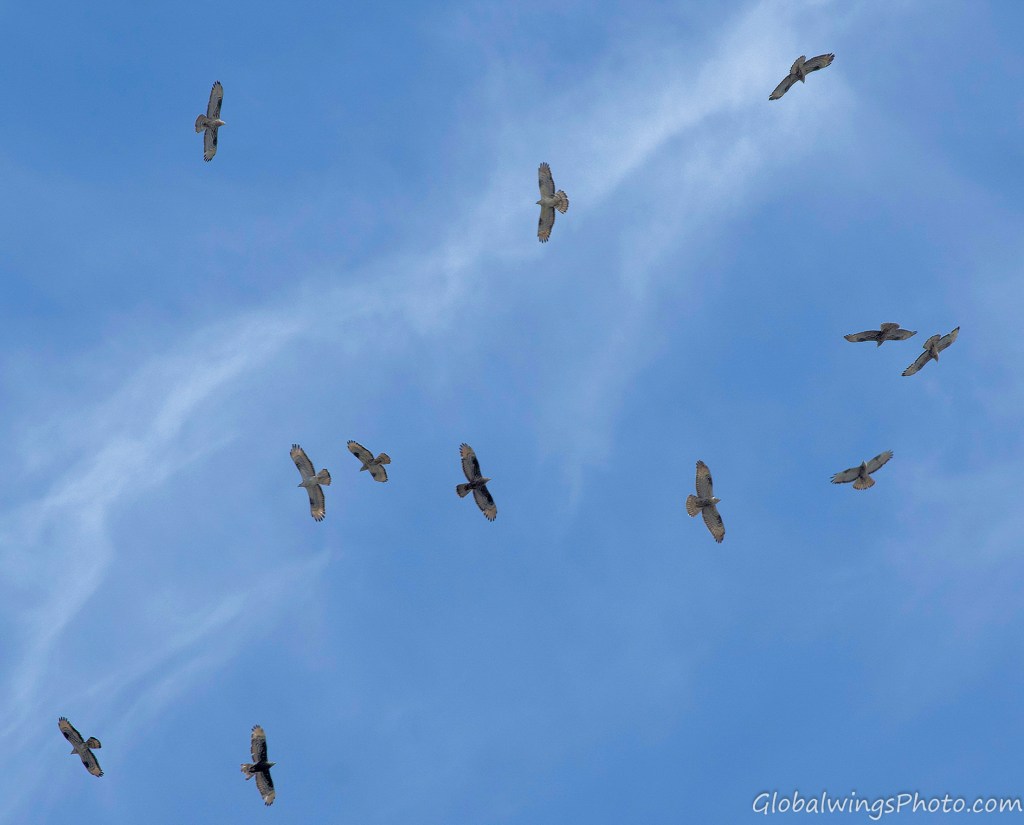
I managed to photograph all colour groups or morphs taken up in ‘Fågelguiden’ (The Bird Guide) by Svensson, Mullarney and Zetterström (2009) as well as in ‘Rovfåglar I Europa’ (Raptors in Europe) by Génsböl (2006). My photos are then authentic versions of the sketches in these books, which mainly distinguish between the three separate male morphs and the two female morphs illustrated in Photos 4-5. Even if it is normally possible to distinguish between adult males and females based on the upperparts, the morphs based on the underside are more helpful in identifying various types of European honey buzzards. For instance, the underside of males is generally found to be lighter than that of females, the major difference being the remiges, which are paler with faint or no markings, while the females’ quills are banded on a darker bottom. The male’s tail is also normally lighter.
Génsböl (2006) also includes a fourth and very dark male morph, having a uniform dark body and secondary coverts contrasting with greyish remiges. It is said to be rare in Scandinavia and common in the Middle East. Génsböl also identifies a third female morph. This dark type differs from the other darker morph through its barred belly and vent and pale greater coverts with a narrow dark band. None of these two morphs were photographed by me, indicating that they are uncommon or perhaps don’t even migrate over the Falsterbo peninsula. Nor do Svensson et. al. include these two dark morphs, which I interpret as another indication of their rareness in the Falsterbo peninsula.
Svensson et.al. also include three and Génsböl six juvenile colour forms, which are not taken up on this page about adult morphs. In general, juveniles are mainly separated from adults through their dark secondaries, and mostly by being streaked instead of barred. This streaking compared to the barring is the major character in distinguishing between dark juvenile and dark adult females.
Male morphs
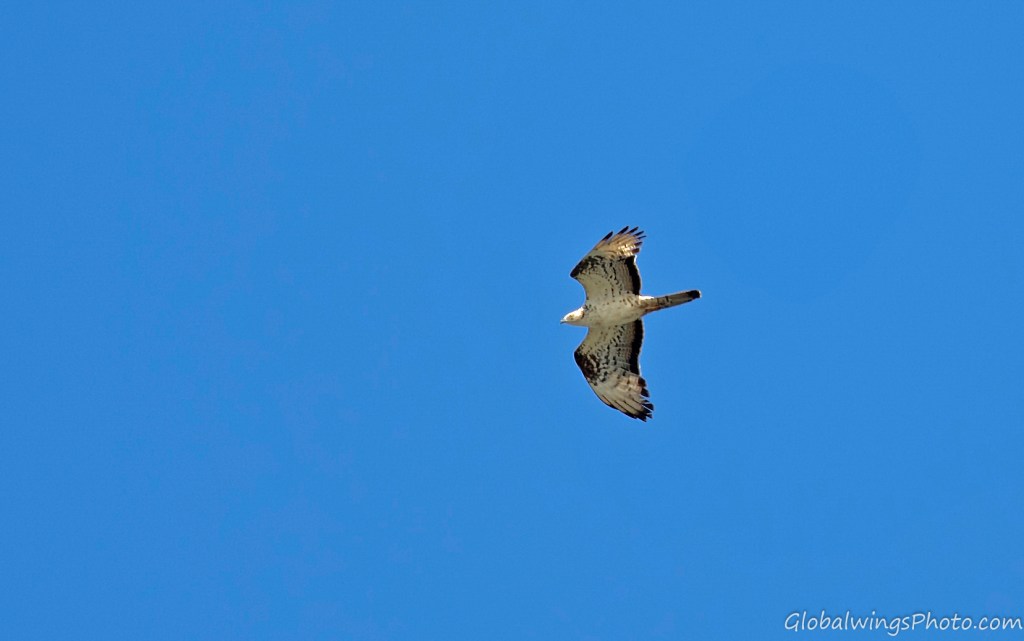
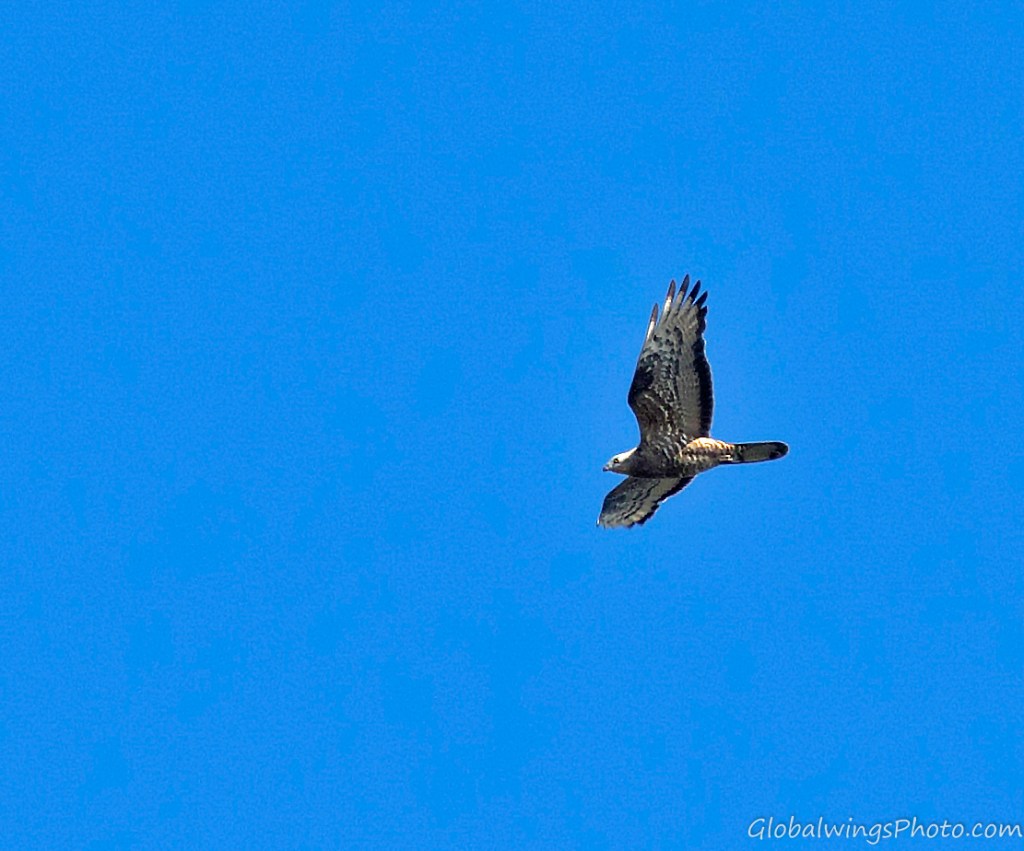
The three male morphs have rather uniform remiges and tails, while the under-wing coverts and bodies differ. As shown by Photos 6 and 7, the secondary wing-coverts of the light form are generally pale with few black markings on the body and primary coverts together with a bold carpal patch. However, they could be spottier on the under-wing coverts and body (Photo 8).
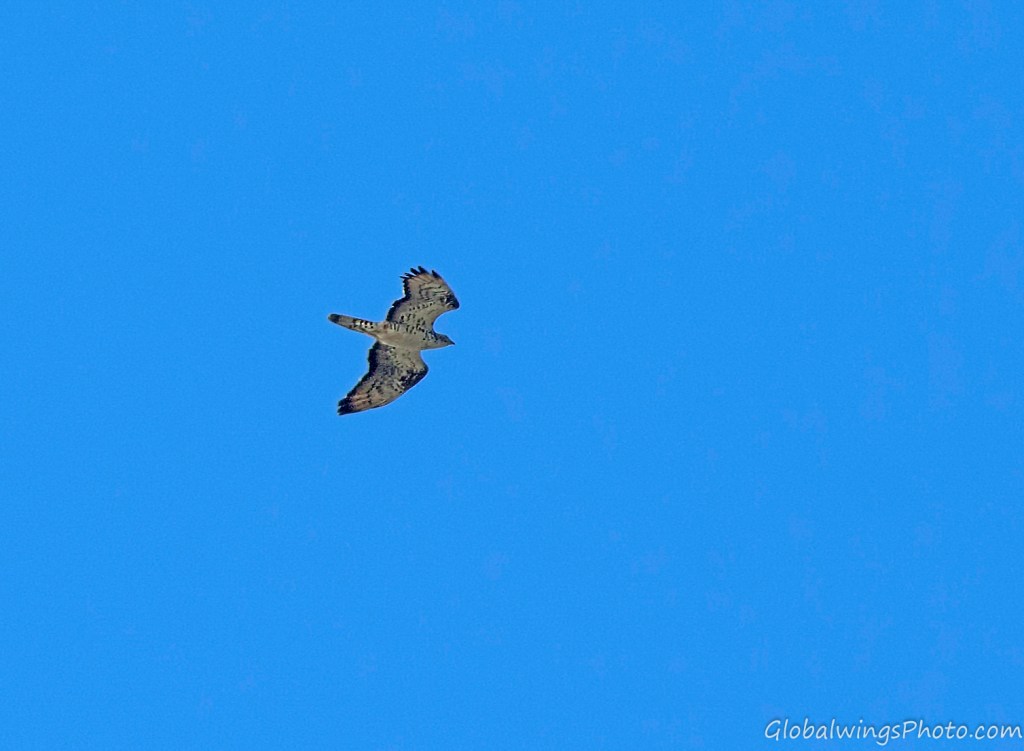
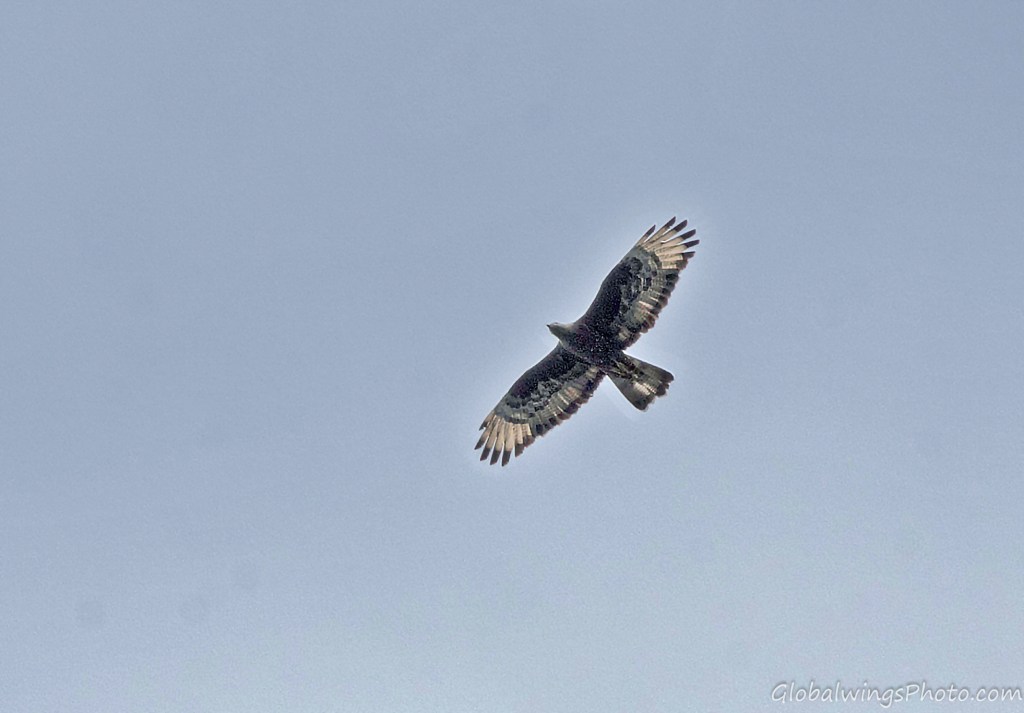
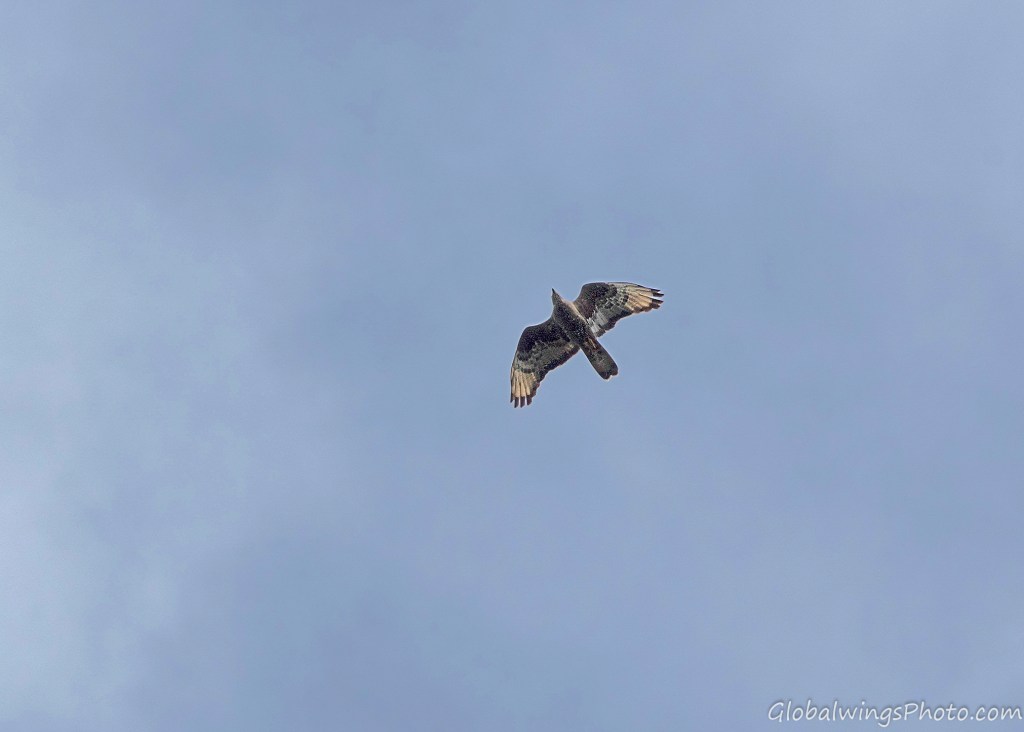
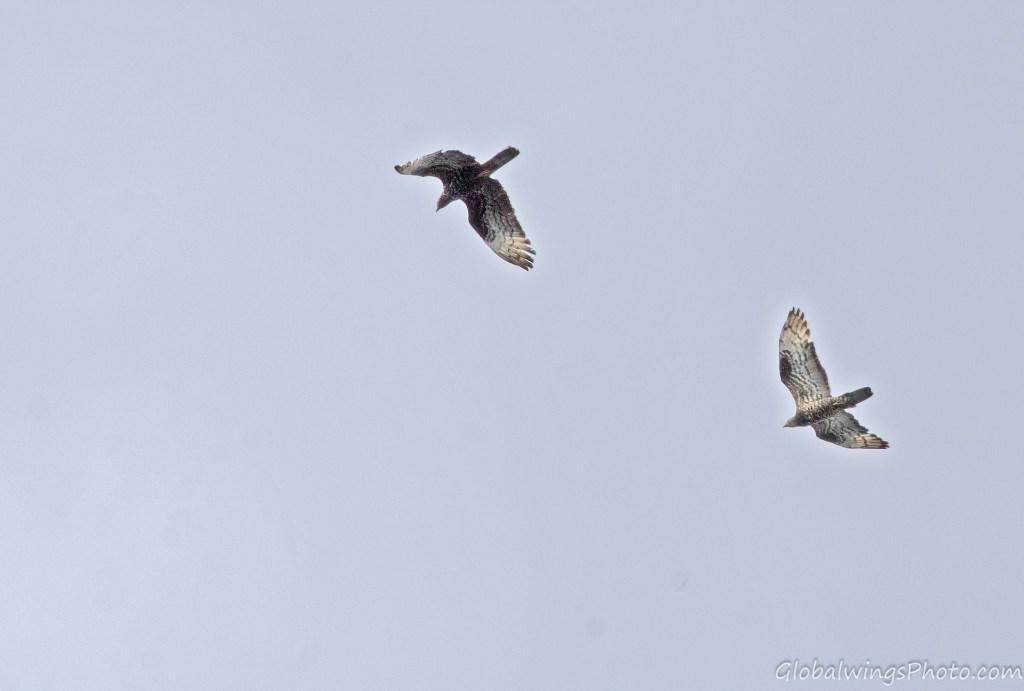
The dark form, on the other hand, has a dark body and secondary coverts (Photos 9-11). The intermediate morph is found in-between the dark and light forms, being mainly seen in that the secondary wing-coverts and body are barred. This is illustrated in Photo 12, where the intermediate morph flies below the dark morph. As also shown in Photo 13, the body and the lesser secondary coverts can have red-brown or brown barring on a pale bottom with a solid narrow band on the median coverts and a dotted band on the greater coverts. As also shown on Photo 14 and especially Photo 15, the wing coverts and body can be more heavily barred.
Female morphs
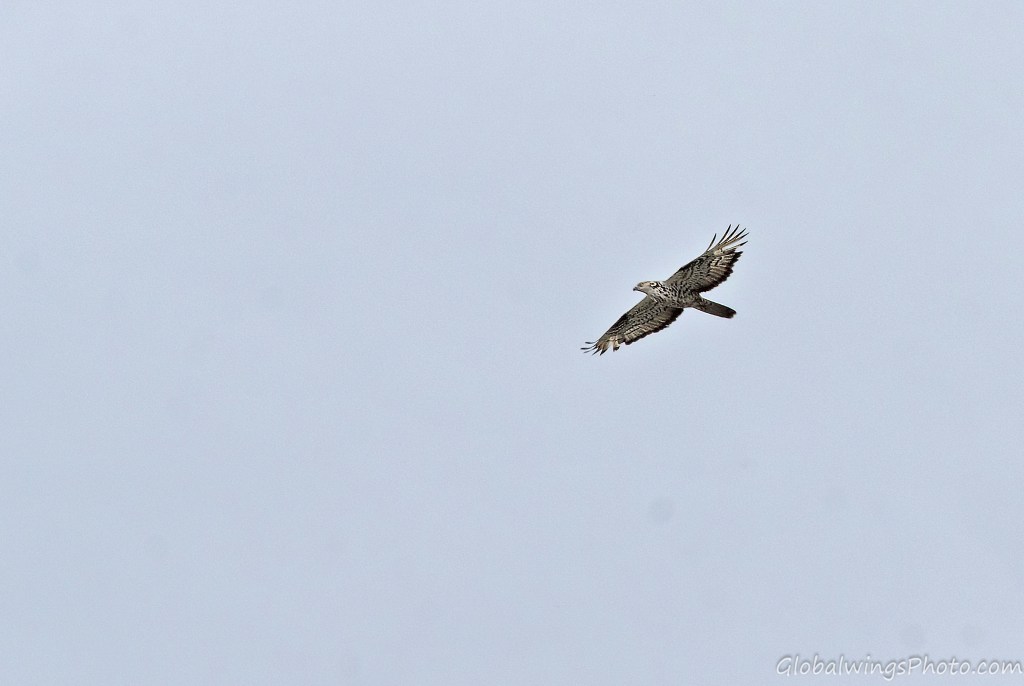
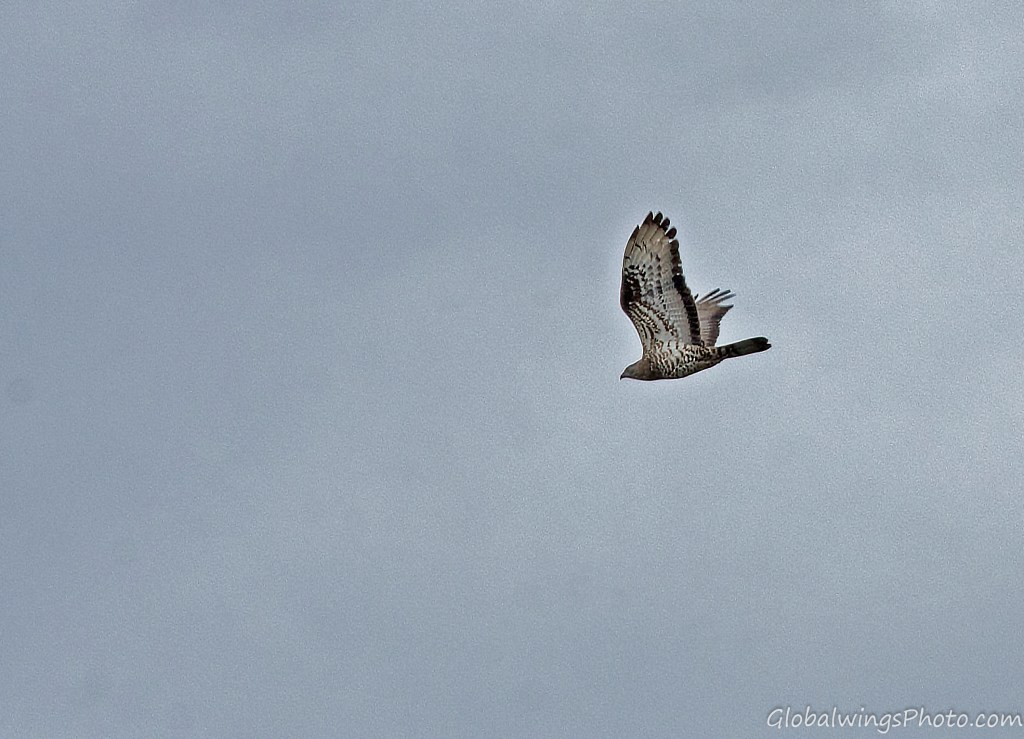
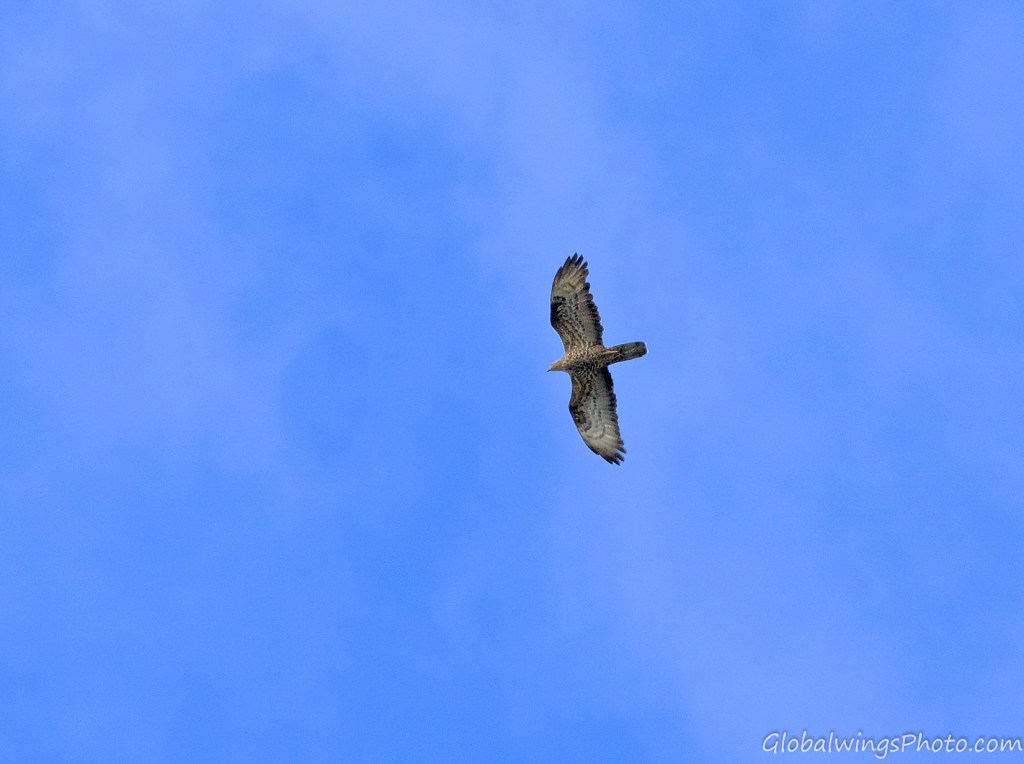
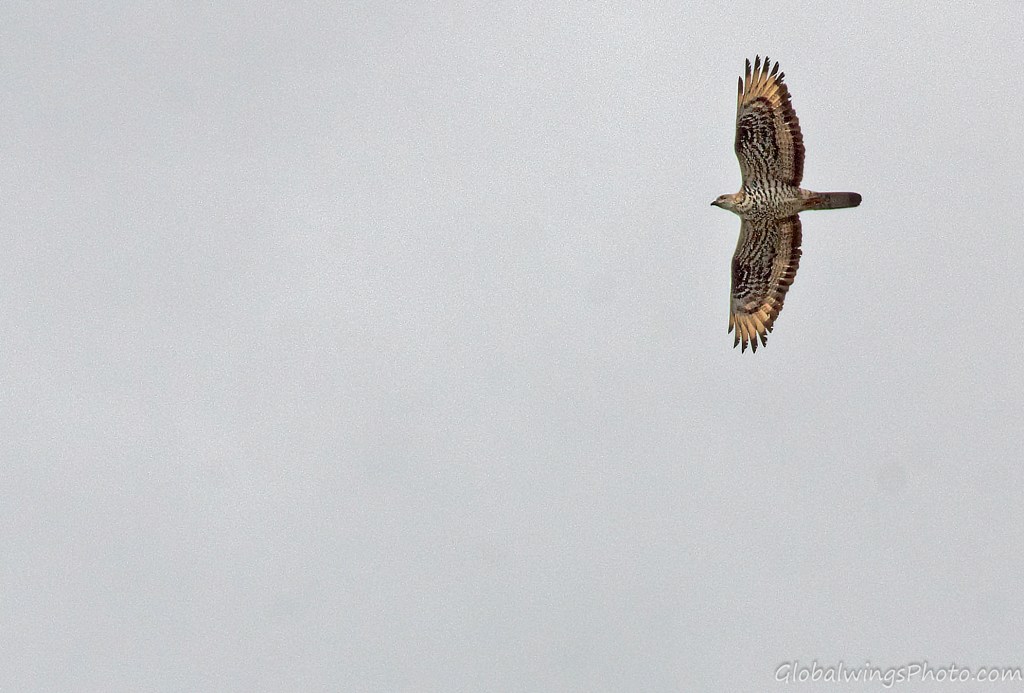
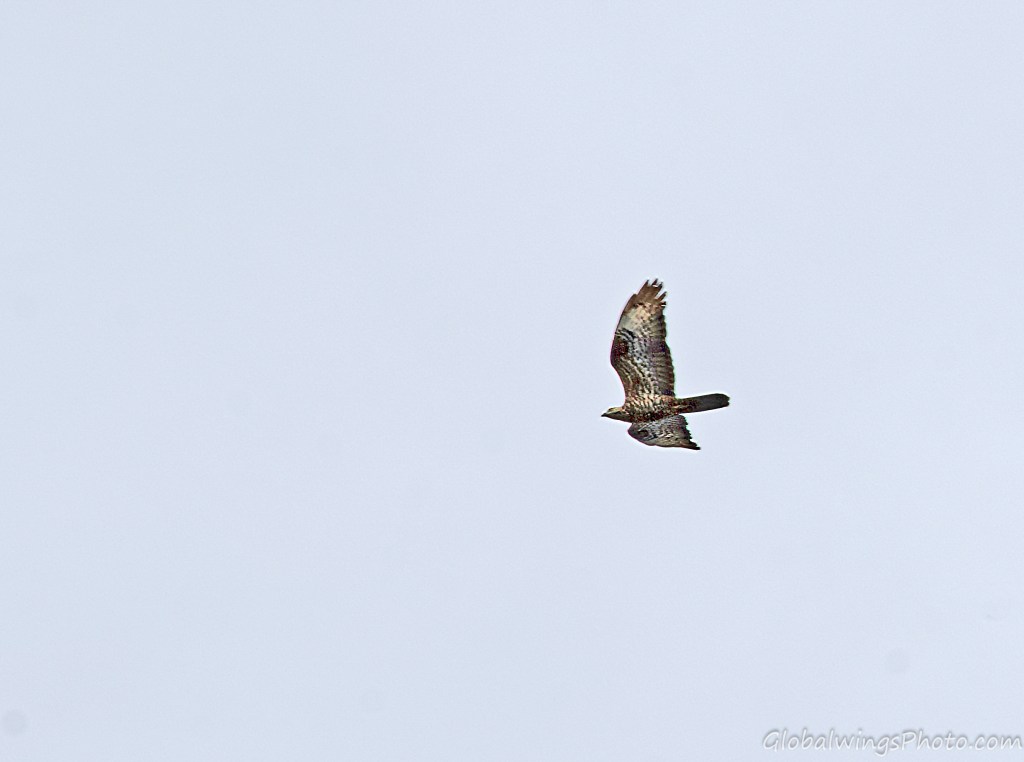
Due to their darker underside, the two female morphs are more similar to the dark male morph than the two lighter forms. Except for the dark male, adult European honey buzzards with dark underparts are then usually female, while light ones are male. As for the males, the remiges of the females are also rather similar, but are darker. The darker female morph has a barred dark body and dark secondary-wing coverts with somewhat paler secondaries and light primaries (Photos 16-17). The body and the secondary coverts of the lighter form have dark bars on a light bottom, giving the bird a spotty appearance (Photo 18).
 Globalwings Photo