Introduction: Photos 1-2
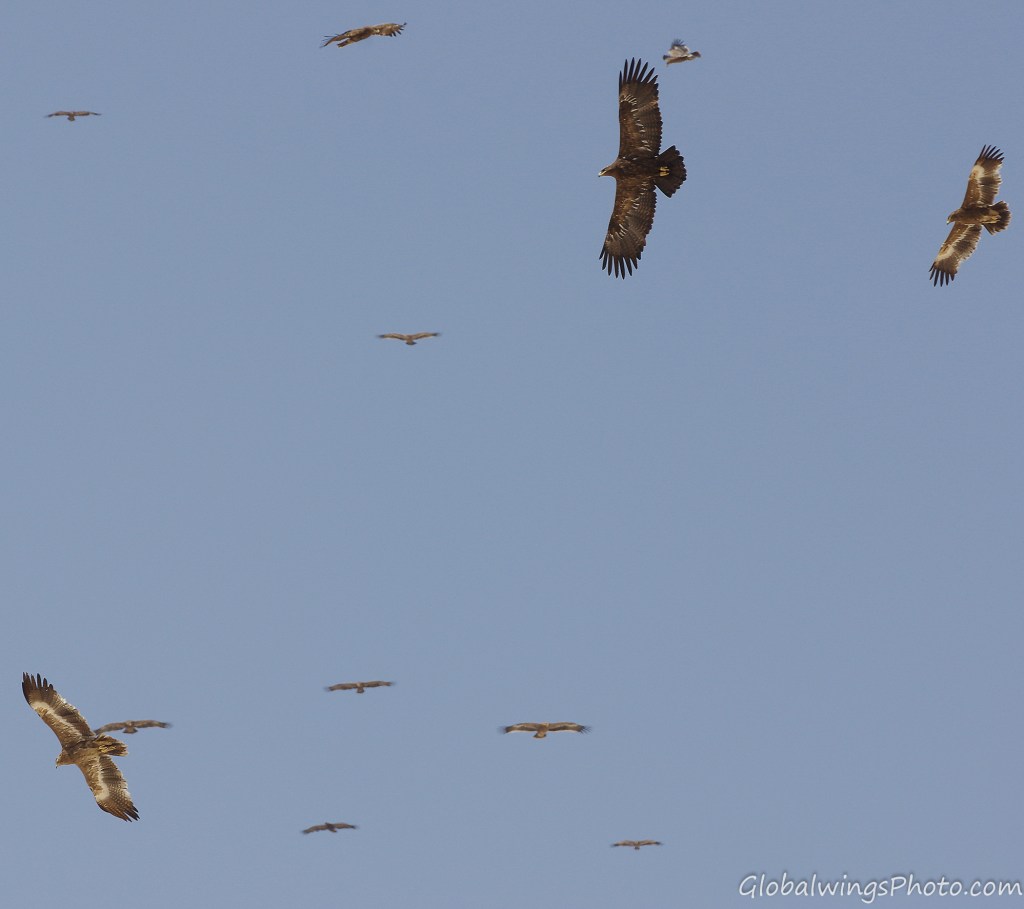
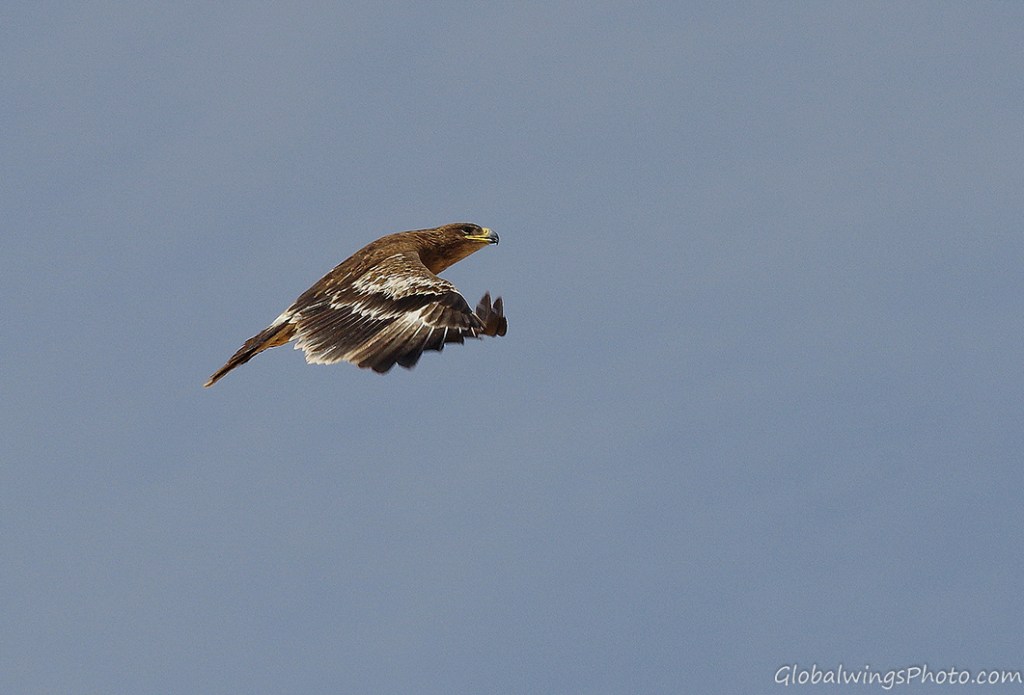
The open waste disposal site West of Salalah, Oman is an excellent place to study steppe eagles through photographing them. More than one hundred steppe eagles usually winter here together with a small number of imperial eagles, greater spotted eagles, and a few booted eagles. Many steppe eagles were constantly soaring above and around the dump, which Photo 1 illustrates. It is therefore a great place to take photos of the steppe eagles throughout the day to study how they vary in colour and with age as well as being possible to compare them with other eagles. I also took several photos of the large flocks of white storks migrating to and from the disposal site. Some of these photos are displayed on the site titled Soaring White Storks on the ‘Themes’ page. Other common birds here are abdim storks and various gulls. I spent two days here in January 2014, where I positioned myself just South of the dump, mainly to avoid its not so pleasant view and smell.
The steppe eagles that winter in Salalah and other places in West Asia and Africa breed in West Asia and East Europe. It is disputable whether this Western population could be seen as a separate race – Aquila nipalensis orientalis -, different from the Eastern population in East Asia that winter in South and Southeast Asia: Aquila nipalensis nipalensis. This implies that the characteristics of the age groups of the Western population presented on this page could also be valid for the Eastern population. This position is also taken by Dick Forsman in his book ‘Flight Identification of Raptors of Europe, North Africa and the Middle East’ (2016) and by Benny Génsböl in ’Rovfåglar i Europa’ (2006), which are the major sources for sorting my photos into different age groups.
A steppe eagle is old or adult at the age of five or six. Both these authors agree on that in addition to the adult plumage, four age-related young plumage-types can be separated in the field. Gènsböl also identifies a fifth separate plumage, but which he says cannot always be separated from the adult plumage. Forsman seems to agree on this and therefore instead defines this plumage as subadult (see pictures 750-752 in his book).
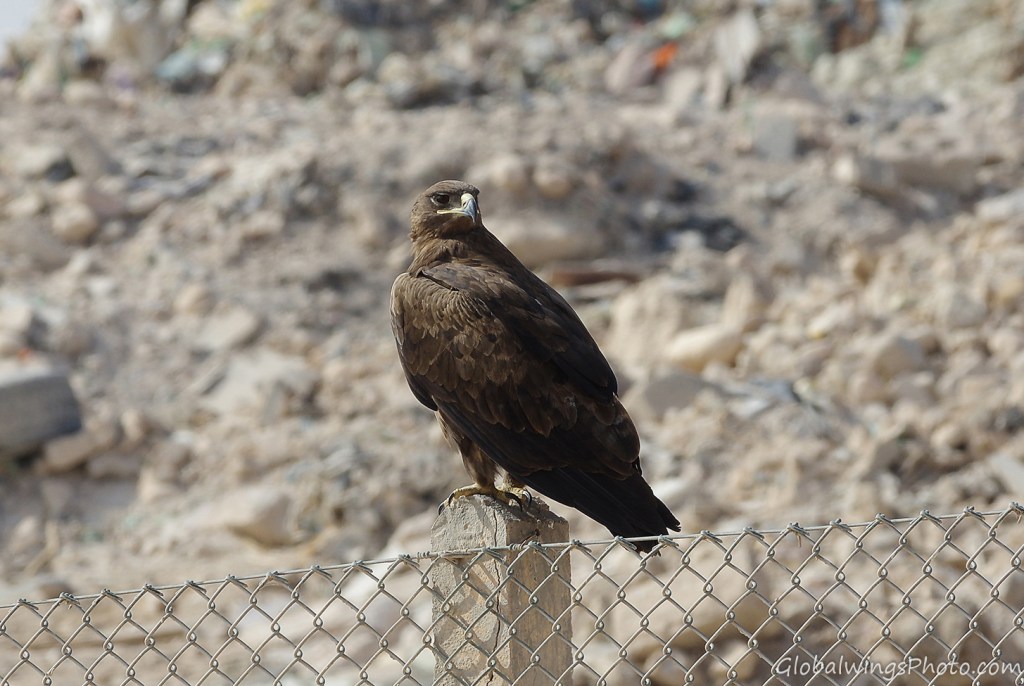
I managed to find all six types of age-plumages identified by these authors. The youngest eagles photographed in January still had their first-year plumage, since their first moulting period was going to begin in March. This means that the plumages could be more worn than the more normal plumages, however, not more than it was possible to determine the age of the bird. The juvenile plumage is abbreviated as the 1Y plumage. The second or first post-juvenile plumage is 2Y, the third 3Y etc. The adult plumage is then 6Y. The adult bird on Photo 2 is dark, but it could also be light. Both these colour forms were common in the dump and is reflected in the images presented on this page. As will be elaborated on more below, this 6Y plumage differs markedly from the plumages of 1Y-4Y birds.
First-year plumage: Photos 3-6
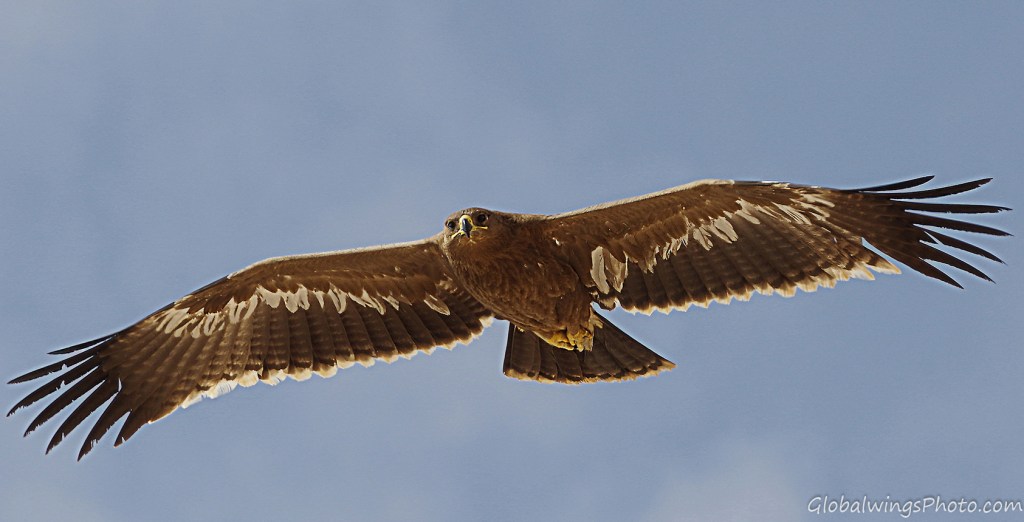
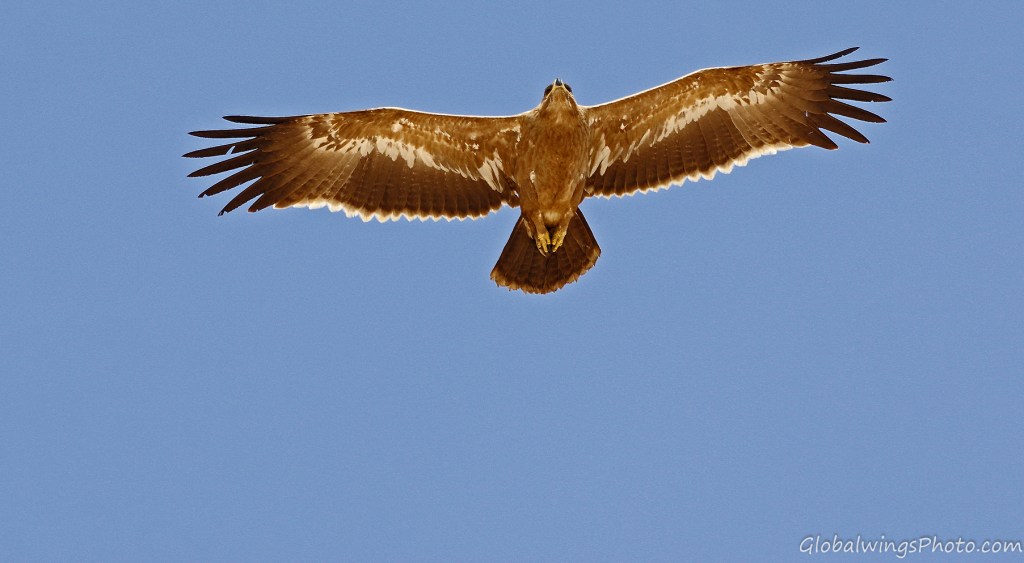
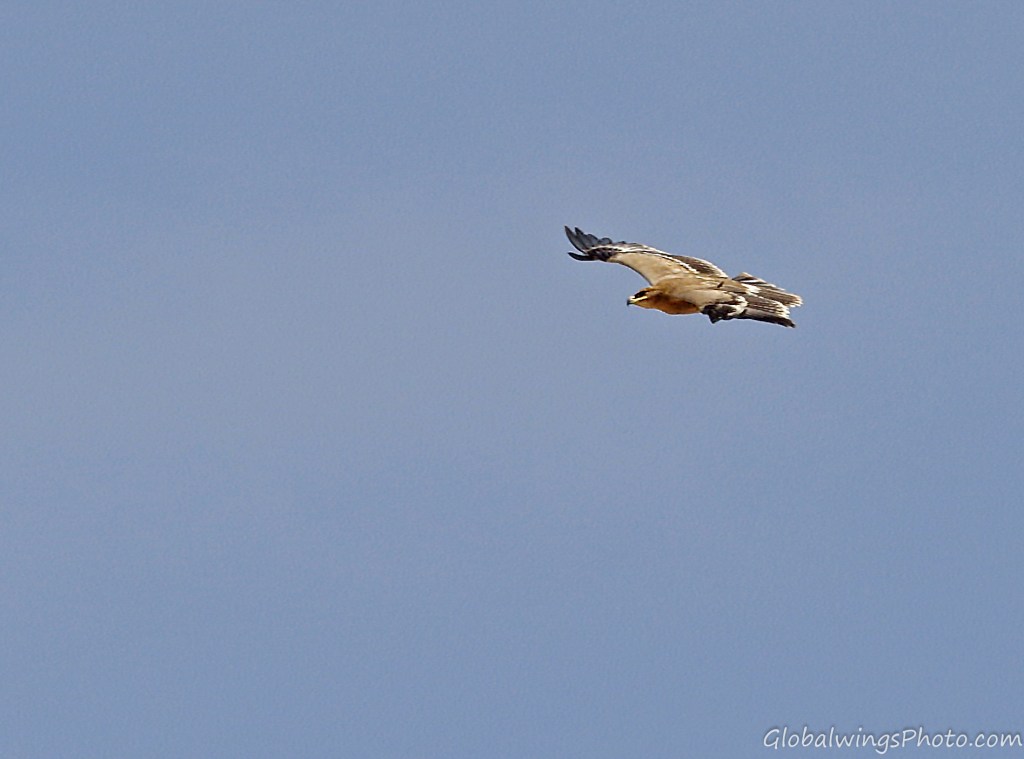
As seen in Photos 3 and 4, the juvenile first-year plumage (1Y) is also brown – dark or light – but not as dark brown as the adult. It mainly differs due to the many pale feathers. The main impression is an eagle with a fresh plumage in pure colours, even if it can be somewhat worn in January. The white tips of the underwing’s secondary and primary greater coverts form a broad pale and irregular band. Another band or trailing edge is formed by the broad white edges of the secondaries and inner primaries. As the primaries are usually lighter than the secondaries, there is a paler area at the under-wing, a primary wedge. The white tips of the tail quills form a third or trailing band. The median and lesser coverts are as brown as the body. The three bands are also found on the upperwing as observed in Photo 5 but are less extensive. The band on the greater coverts is narrower and limited to the tips, sometimes only found at the outer wing.
Second-year plumage: Photos 7-9
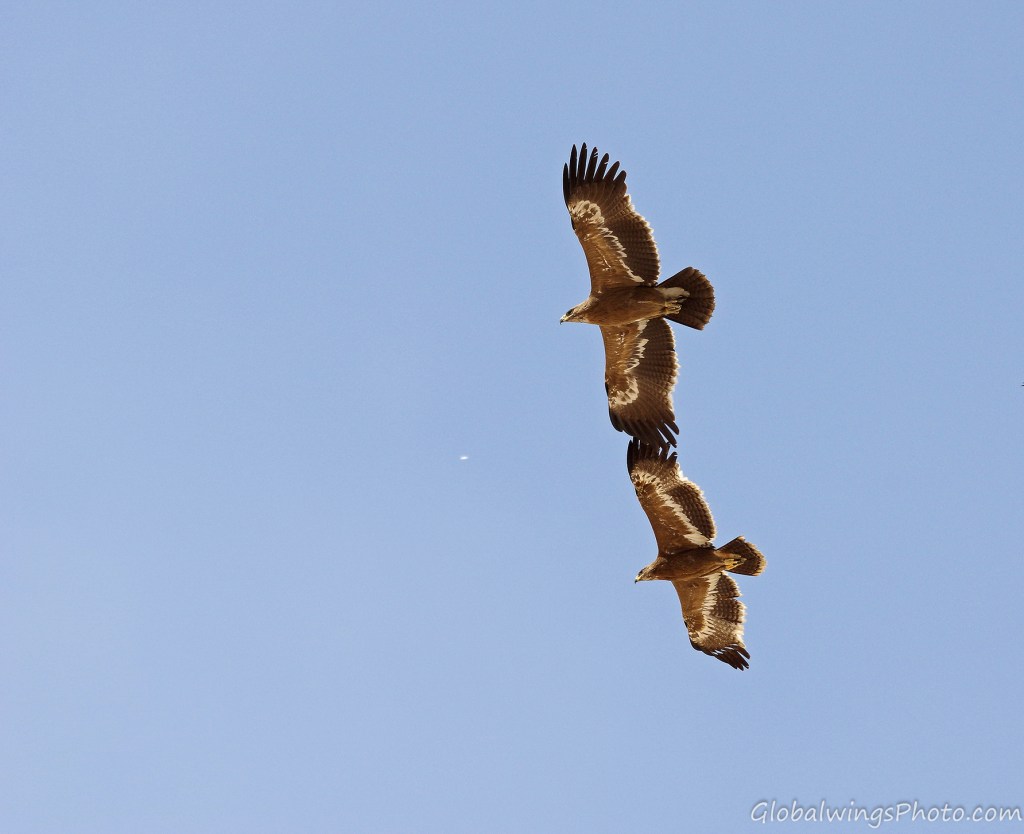
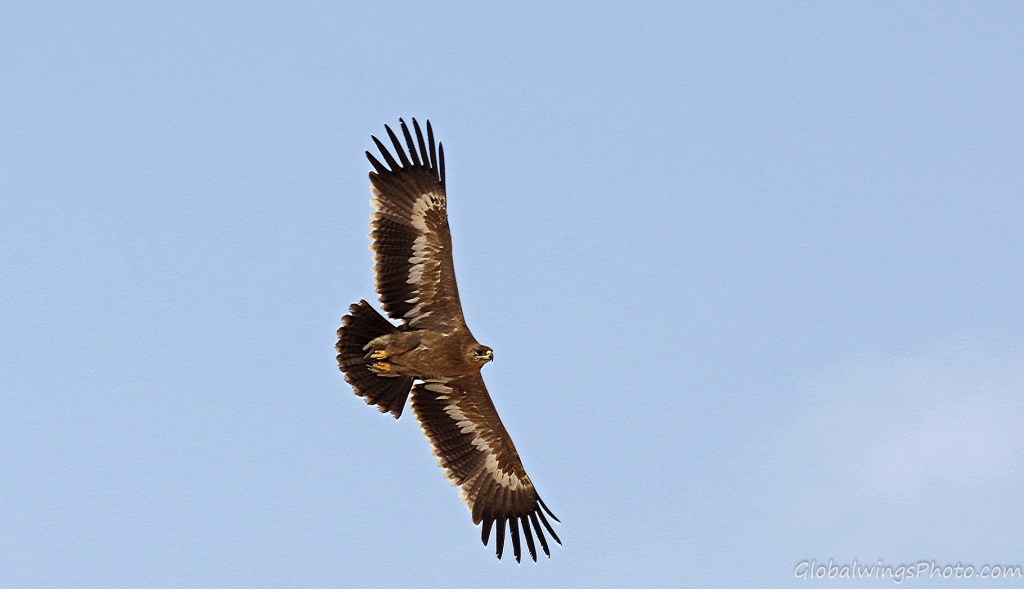
The pale feathers of the 1Y birds are gradually changed to the dark feathers of the adult plumage. As seen in Photo 7of two young steppe eagles, the post-juvenile 2Y eagle above looks more worn than the juvenile bird below. The underside shown on this photo and Photo 8 is similar to 1Y except for the narrower and more irregular trailing edge. The white colour has been worn out to form this narrower trailing edge and new quills with a broad white edge have started to replace the old worn-out remiges. This is seen on Photo 8 on the inner primaries and about half of the secondaries. The band on the greater coverts is largely intact, while this eagle’s median and lesser coverts have become more variegated, since they now consist of old, pale feathers together with new and darker ones. As the white trailing band has been worn out, the tail is now almost entirely brown.
As found on Photo 9 showing the upperparts, the band along the greater coverts has become more irregular as some parts have been more worn-out and narrow at the same time as new and broad feathers have replaced older ones. There is no band on the median coverts.
Third-year plumage: Photo 10
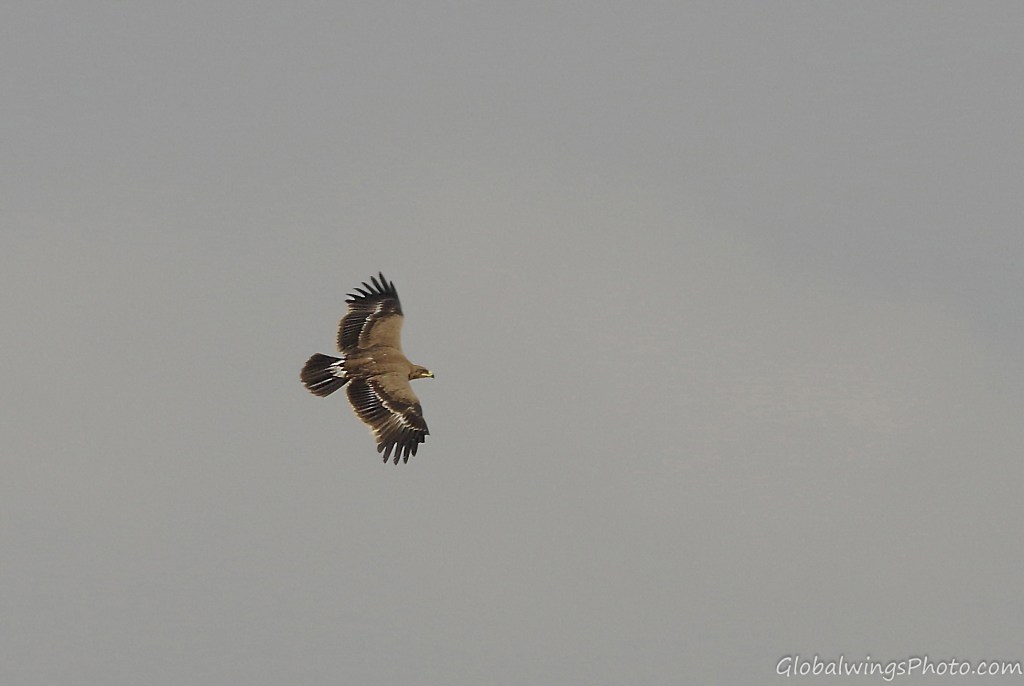
The plumage of the 3Y eagle is found in-between the 1Y and 2Y plumages above and the more adult-like plumages below. As can be seen on Photo 10, the trailing edge has become more irregular, since it now consists of white and brown remiges from three age groups. The first brown and barred adult feathers with a broad dark edge are now present together with older and worn white-tipped feathers remaining from the 1Y and 2Y plumages. The white parts of the median and lesser coverts are now fewer due to more adult brown feathers. The white band of the greater coverts is more irregular. The eagle on Photo 10 has a broken and irregular band consisting of a mix of white, pale-edged and brown feathers. The tail feathers are brown and worn.
Fourth-year plumage: Photo 11
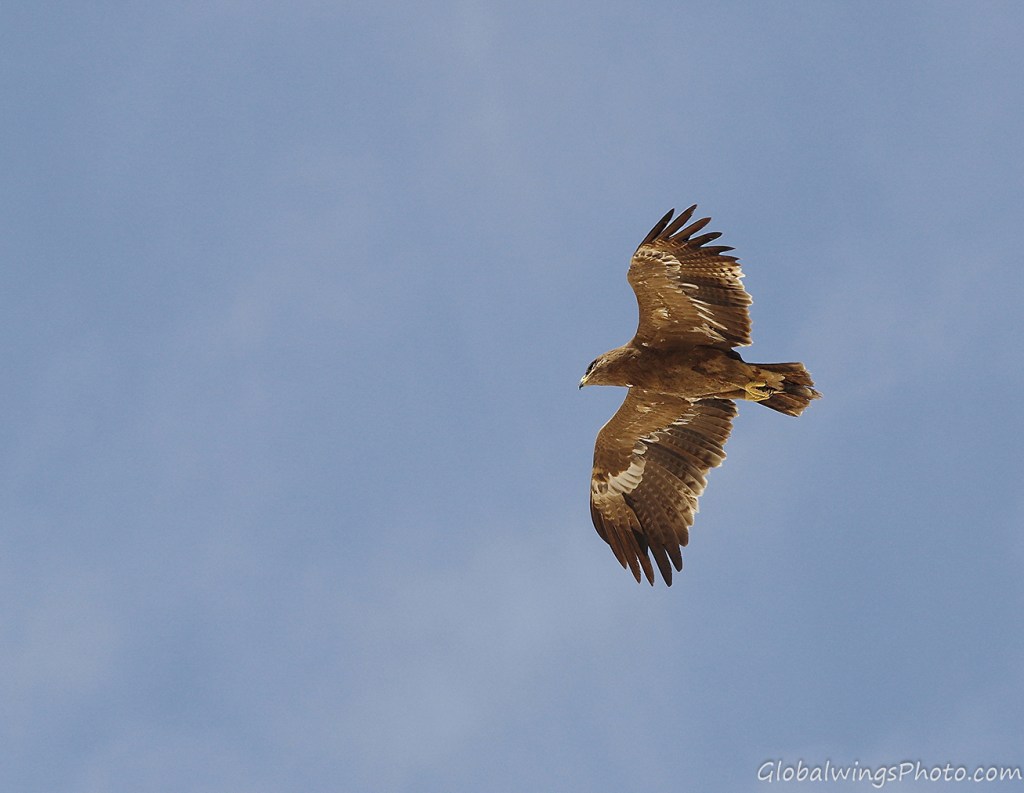
The 4Y plumage is the first one similar to an adult plumage. Photo 11 shows that almost all white-tipped feathers have been replaced by brown ones. This mixture creates an irregular dark trailing edge: new strongly barred feathers with broad, dark margins and few old with narrow margins. The greater coverts’ band is still rather uniform. Some light elements remain on the median and lesser coverts. The tail gives a variegated appearance as there are now some dark-brown adult feathers.
Fifth-year or subadult plumage: Photos 12-13
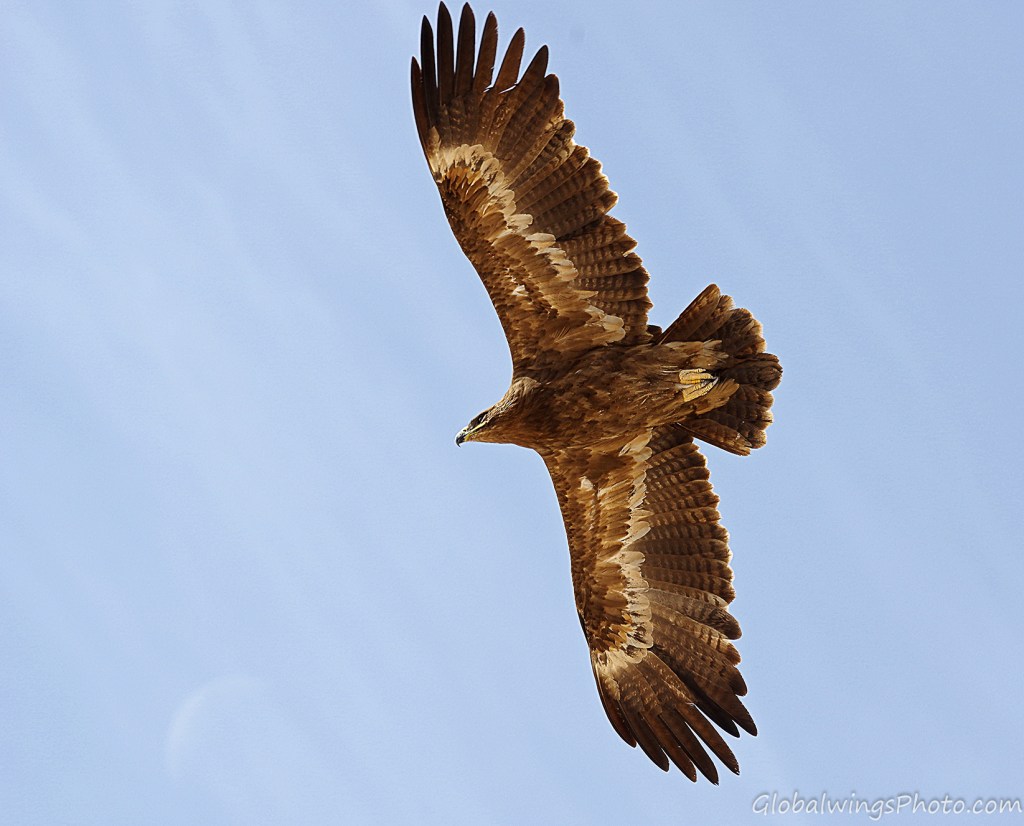
Photo 12 demonstrates that the dark trailing edge is now complete, that is all adult remiges have come of age. The band across the greater coverts is now considerably narrower, since all light feathers have disappeared and been replaced by those with greyish-light margins. The median coverts are light brown, while the other coverts have dark-brown streaks, giving the bird a variegated appearance. The tail has also more adult brown quills, which strengthens this motely impression. But as shown by Photo 13, the dark-brown, light-brown, and pale parts vary. This bird has pale parts on the median coverts but not on the greater coverts.
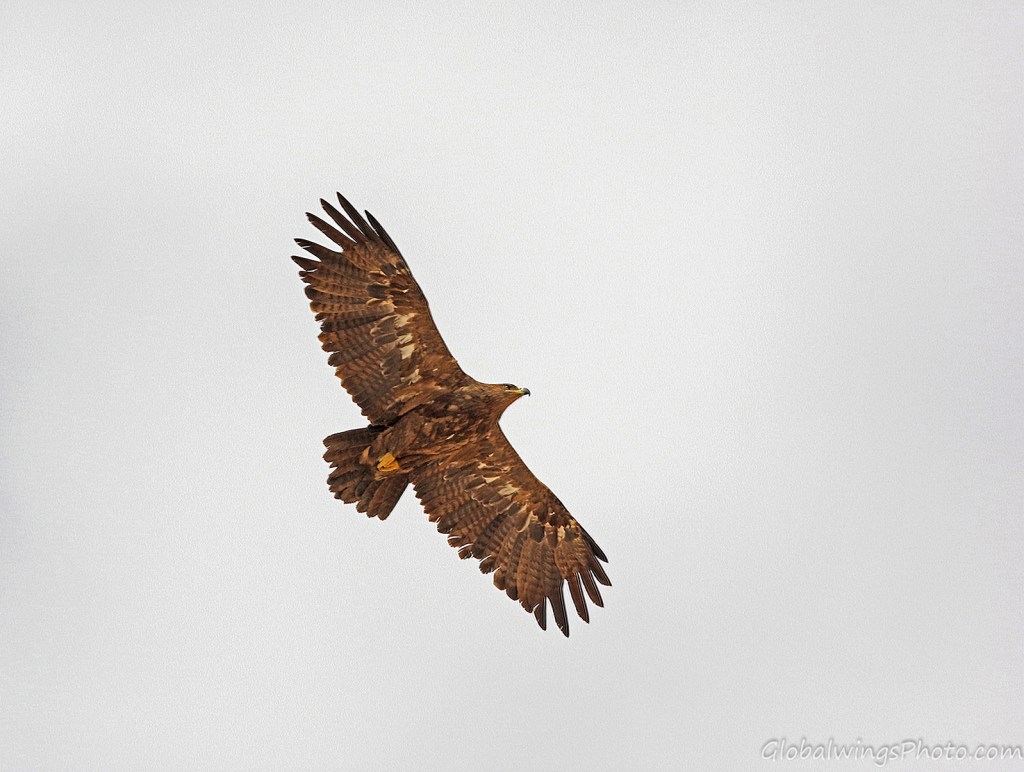
Sixth-year plumage and older: Photos 14-15
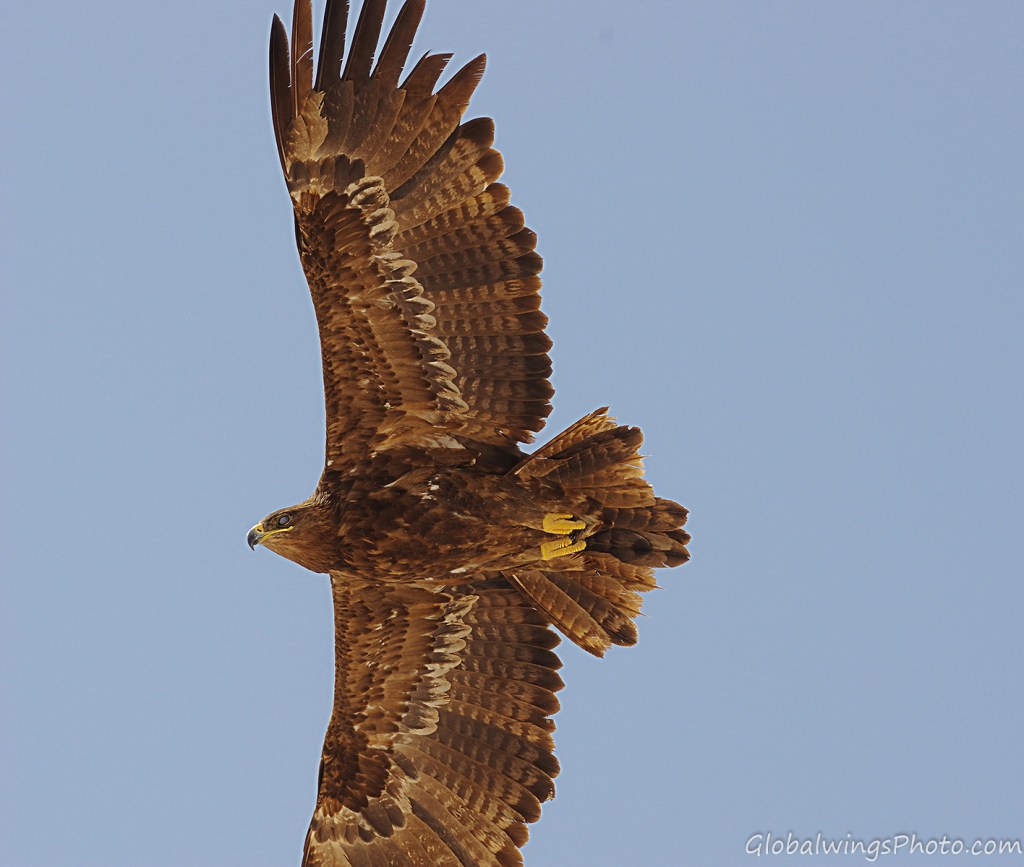
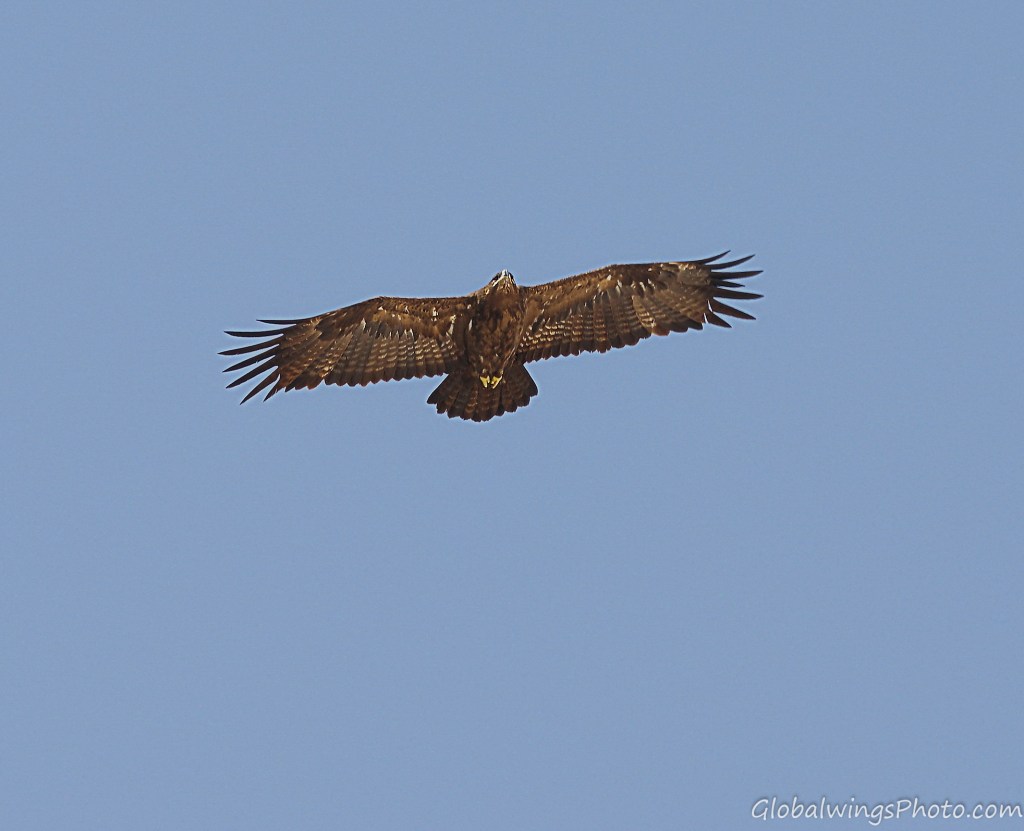
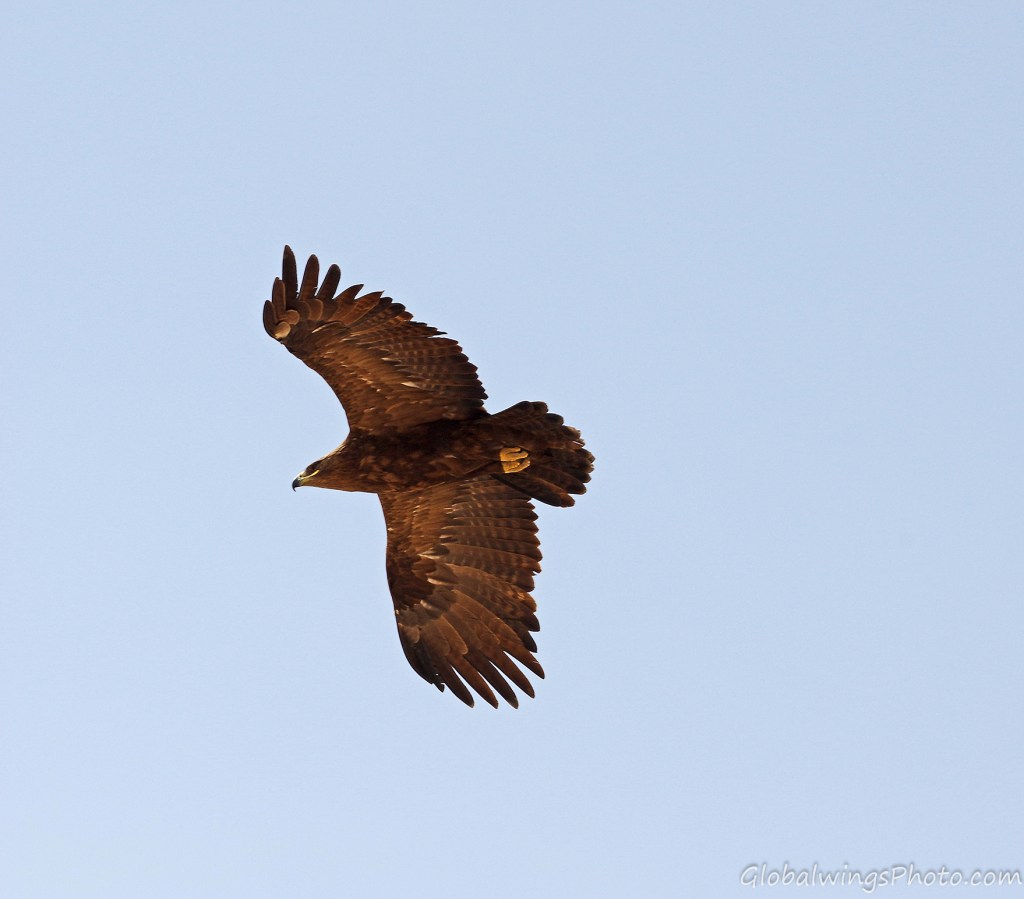
The adult eagles found on Photos 14 and 15 are uniformly dark brown with a dark trailing-edge and yellow legs.
CONCLUSIONS
A major conclusion from the images above of the under-wing patterns is that the trailing-edge works as the most solid character of a steppe eagle’s age. This only general trait concerns the moulting of mainly the secondaries but also the primaries. But the band across the greater coverts is the most mentioned age-determining character in field books. However, as judged from the different images, it cannot be used as a general age character due to being largely intact throughout all plumages from 1Y to 4Y. It is therefore mostly useful to distinguish between adult and younger birds. Some remains of this band are also found with 5Y or subadult eagles. Another conclusion is that the tail’s terminal band only seems to be useful in the 1Y-3Y range for determining the age. Likewise, the usefulness of the band on the median and lesser coverts seems to be limited to the 1Y-4Y range. Regarding the upperparts, photos 1, 3 and 5 can be a valuable help in determining 1Y, 2Y and adult steppe eagles but not the other age categories.
 Globalwings Photo