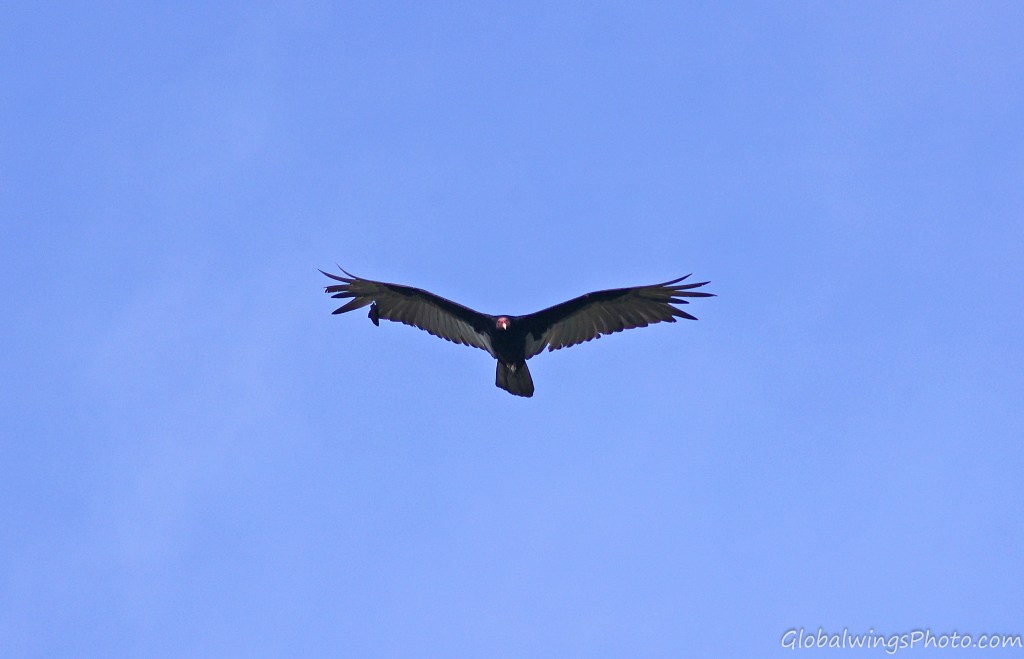
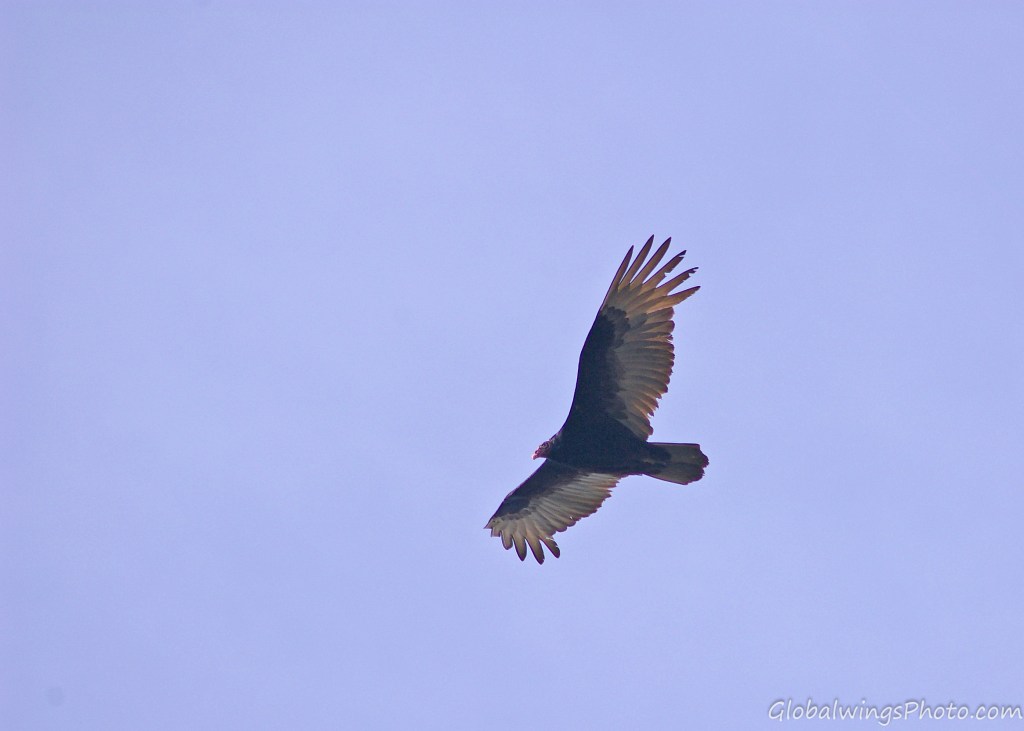
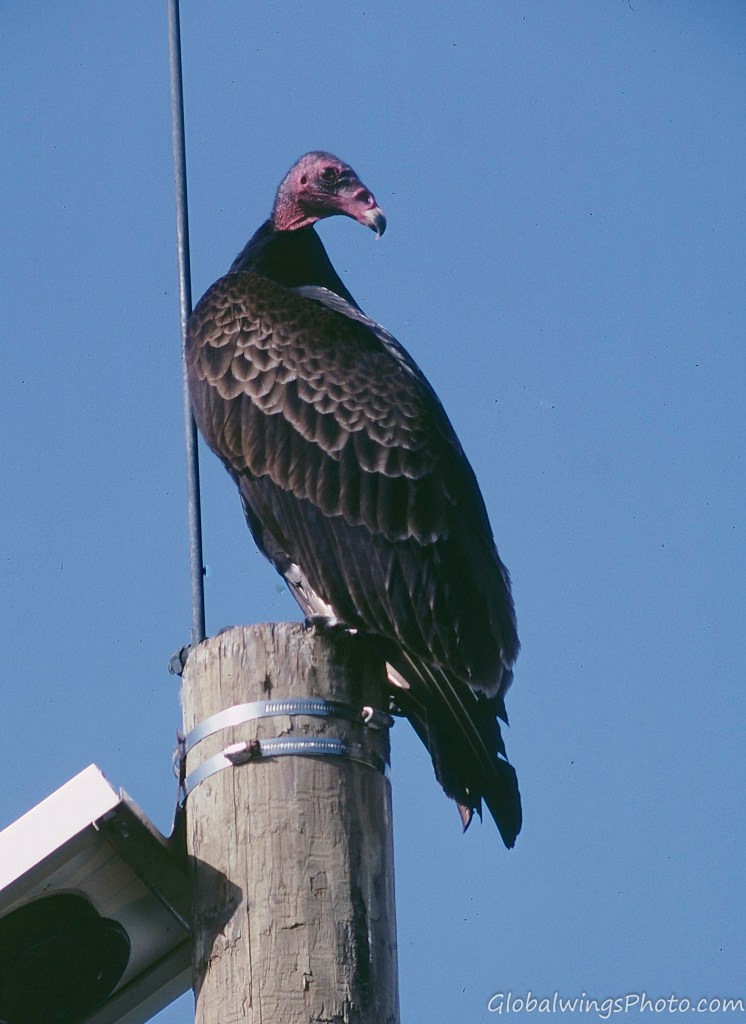
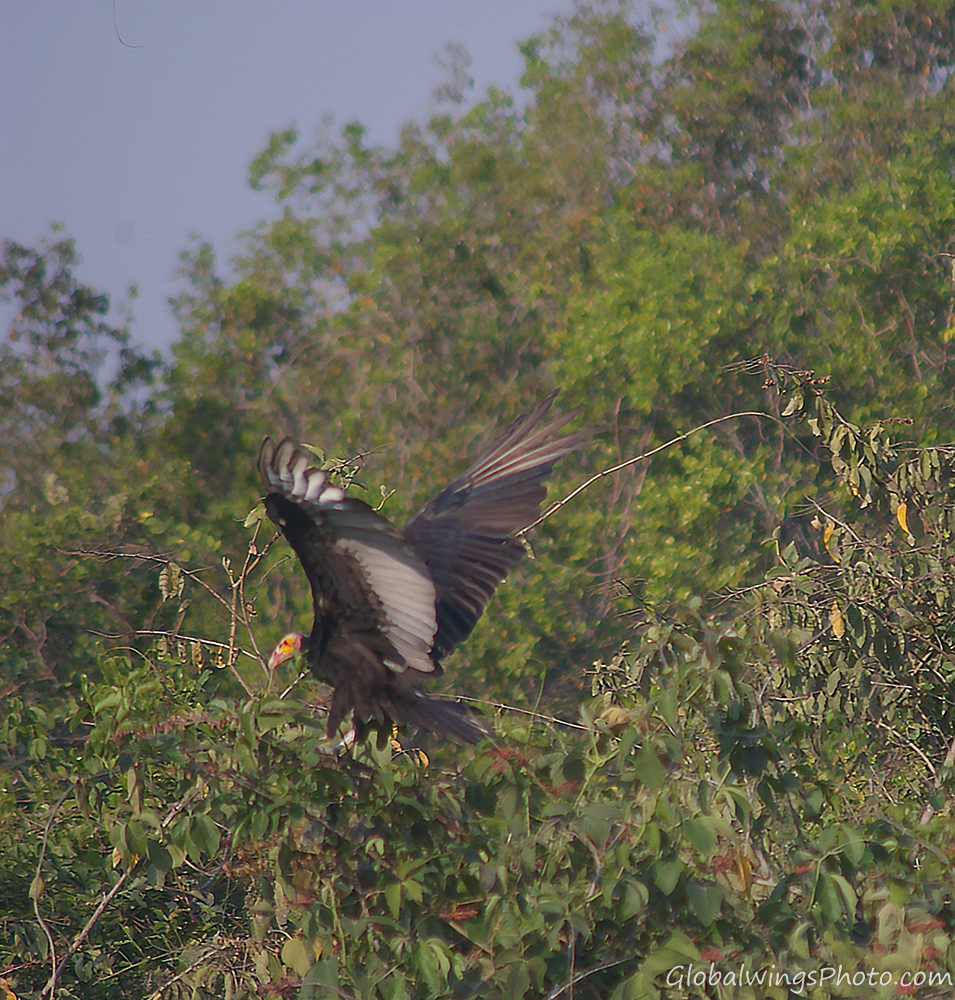
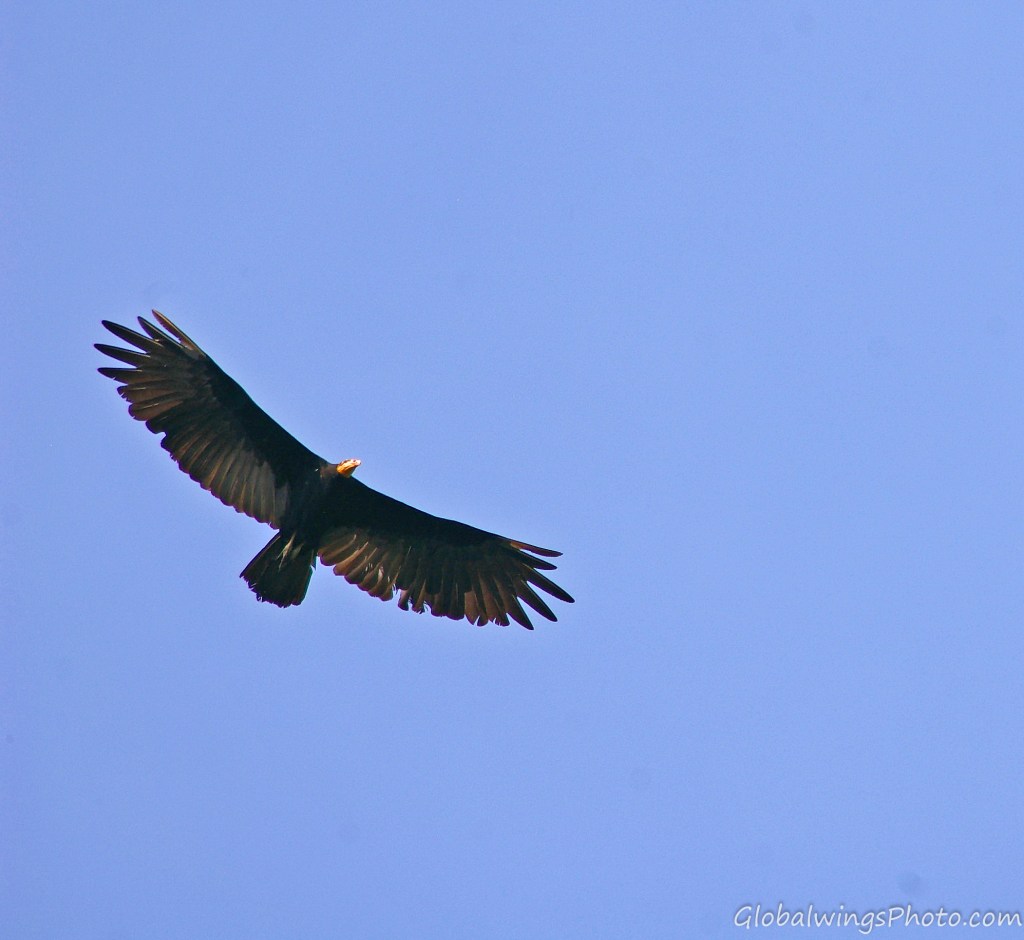
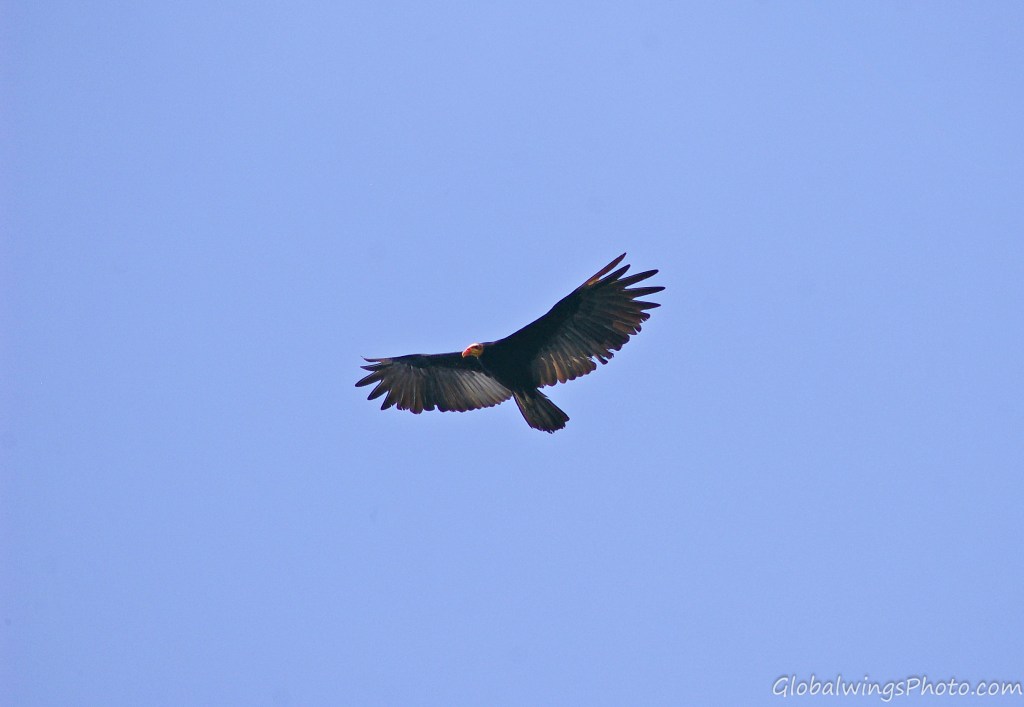
The Turkey Vulture is found throughout most of the Americas. I have encountered it in Brazil, Peru, Costa Rica and North America, most northerly in British Columbia, and being especially common in Florida during wintertime. The Turkey Vulture is unmistakable by its elegant flight on highly V-formed wings, looking more like a large harrier than a vulture (Photos 1-2). The red head of the adult is also typical (Photo 3). However, the colourful head of the immature could be hard to distinguish from Lesser Yellow-headed Vulture, in particular. It is least concern (LC), the population size (PS) is 4.5 – 18 million and stable.
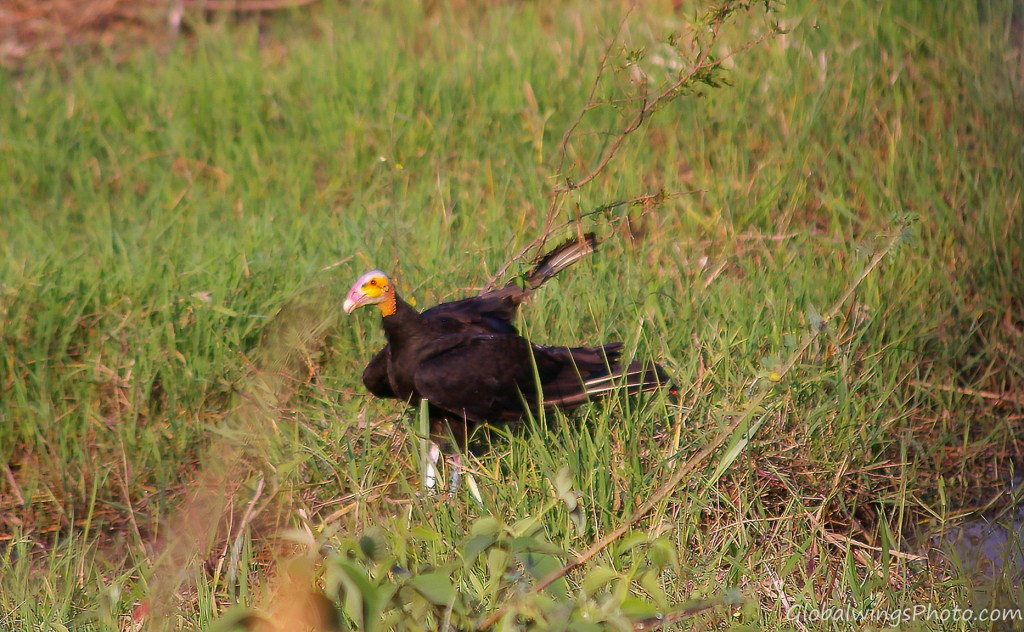
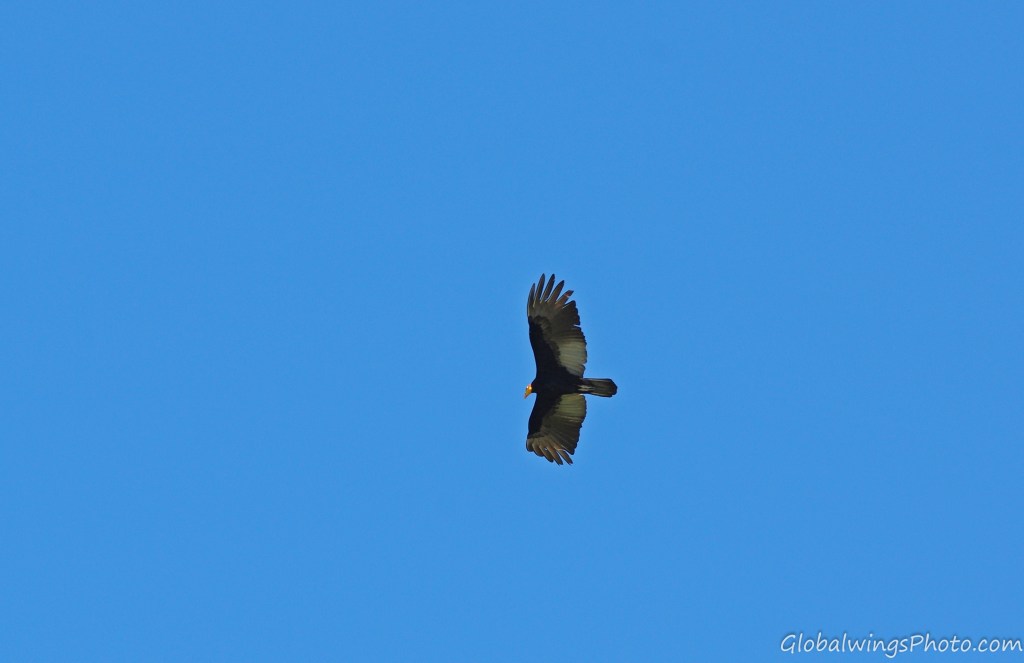
The Lesser Yellow-headed Vulture (Photos 4-5) and the Greater Yellow-headed Vulture (Photos 6-8) were classified as the same species until 1964, when they were split into two species. As the photos show, they both look like typical vultures and are quite alike. They mainly differ in head pattern. More importantly, they live in separate biotopes, the former in open grassland and the latter in forests. I have seen the lesser one in the fields of Pantanal, and the greater one in different parts of the Amazonian jungle. They both are LC, the population size for the former being stable and decreasing for the latter.
The Black Vulture (Photos 9-11) is the most common new world vulture and found throughout the Americas. This almost wholly black and small vulture is easy to identify and can be seen more in cities than the other American vultures. It is also LC, the population is 20 million and increasing.
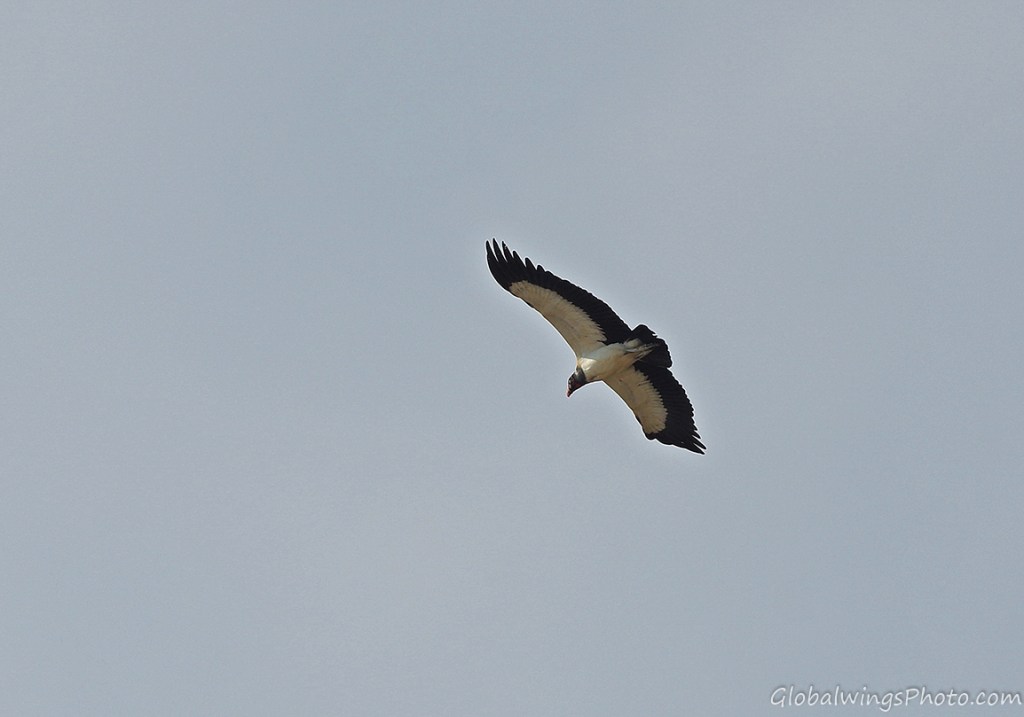
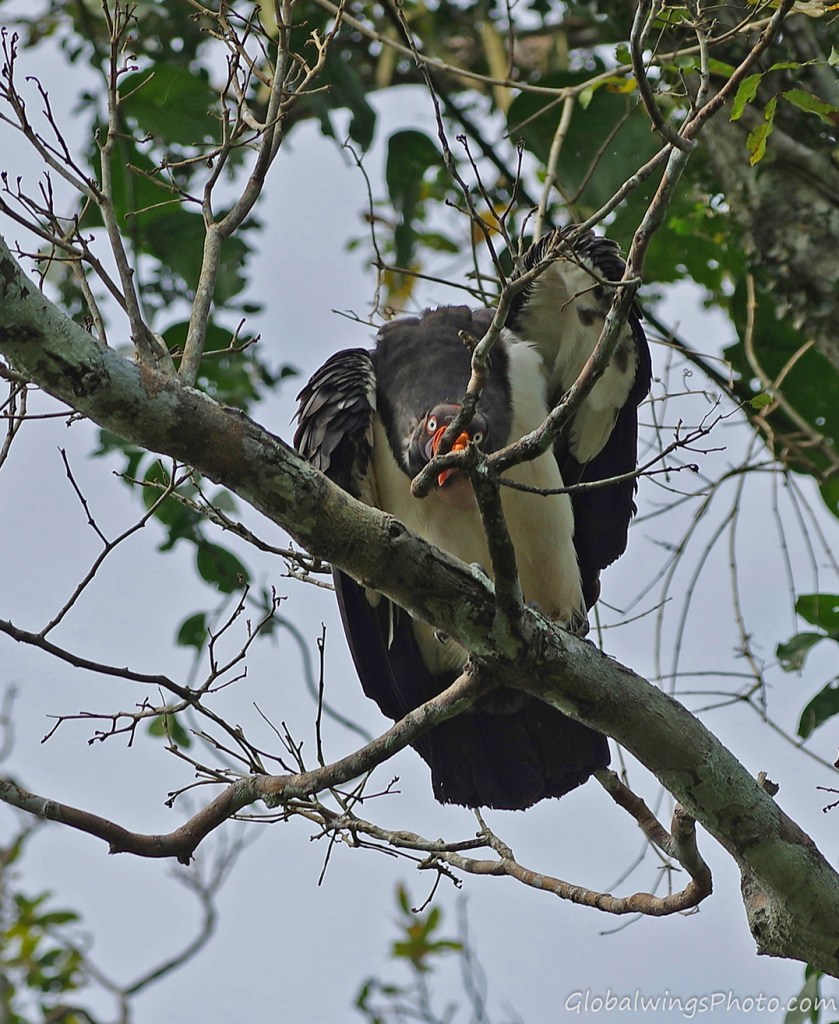
Based on my experience of the King Vulture in Costa Rica and Peru, it wins the beauty prize among the vultures of the world. It is easy to recognize at close range through its colourful head (Photo 12) and far away through its white body and wing coverts contrasting with the black quills (Photo 13). I will never forget its piercing gaze (stare), as it seemed to evaluate me to find out if I were still alive (Photo 14). It is LC, while the PS is 1000-10.000 and decreasing.
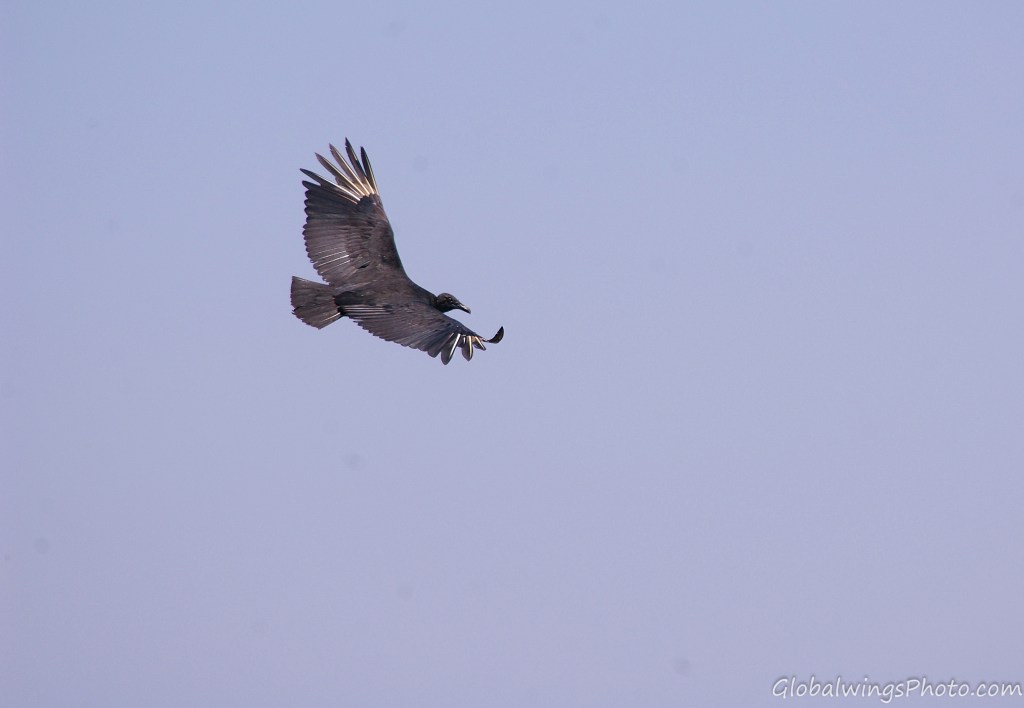
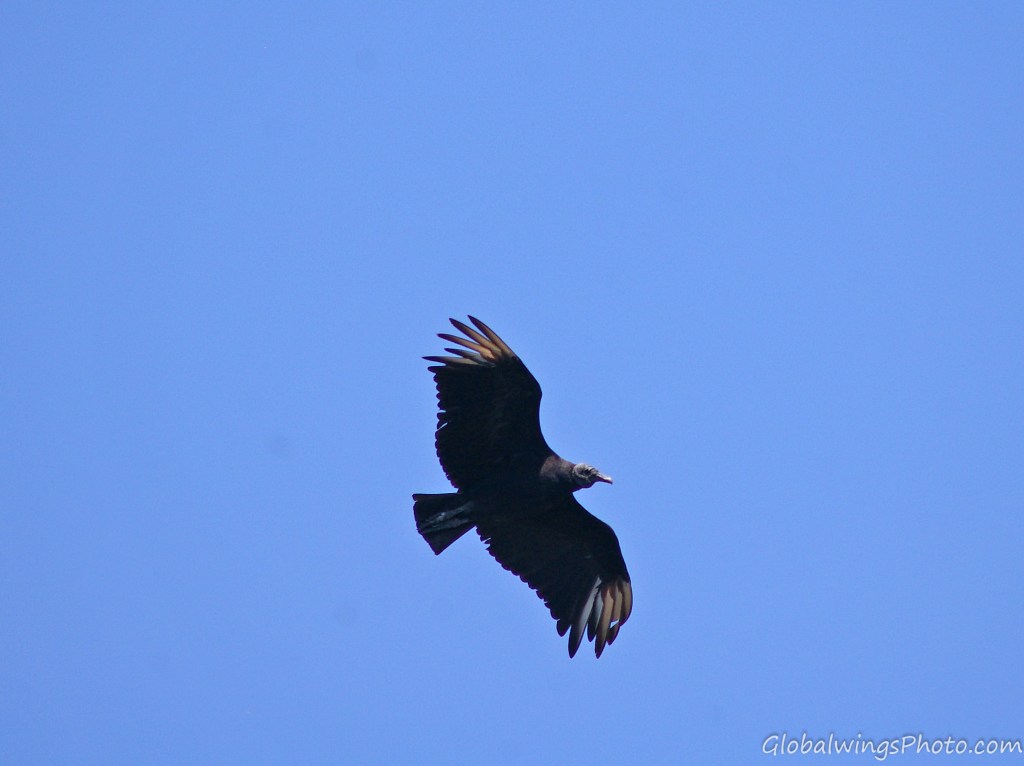
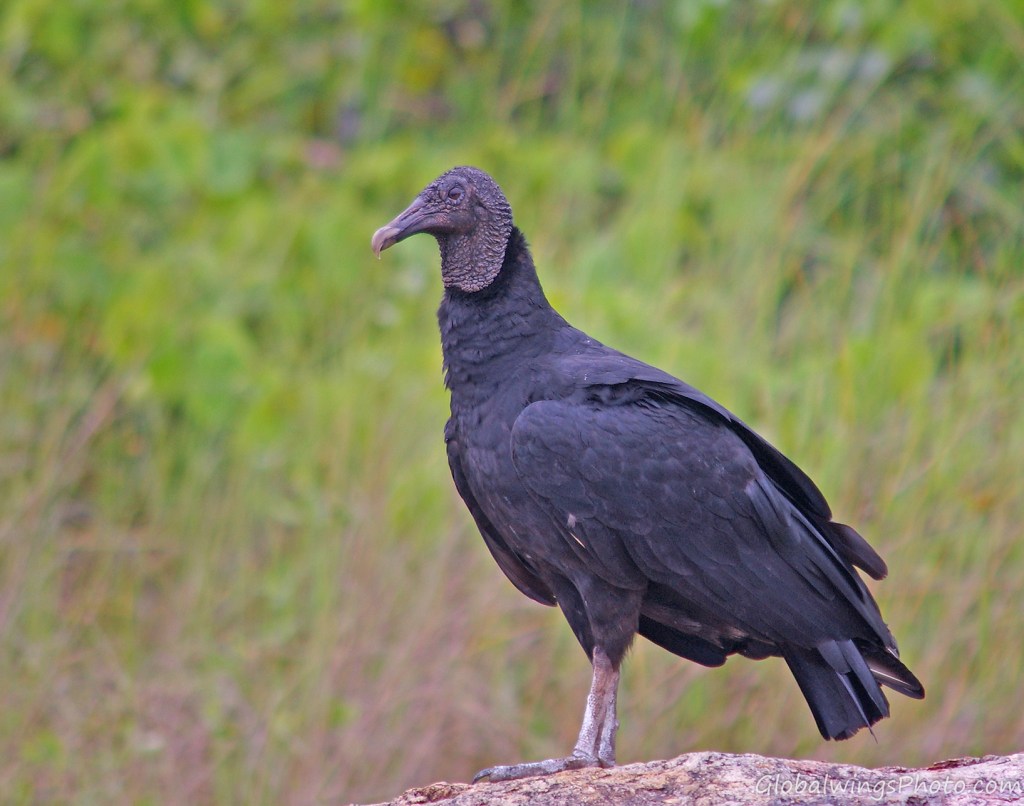
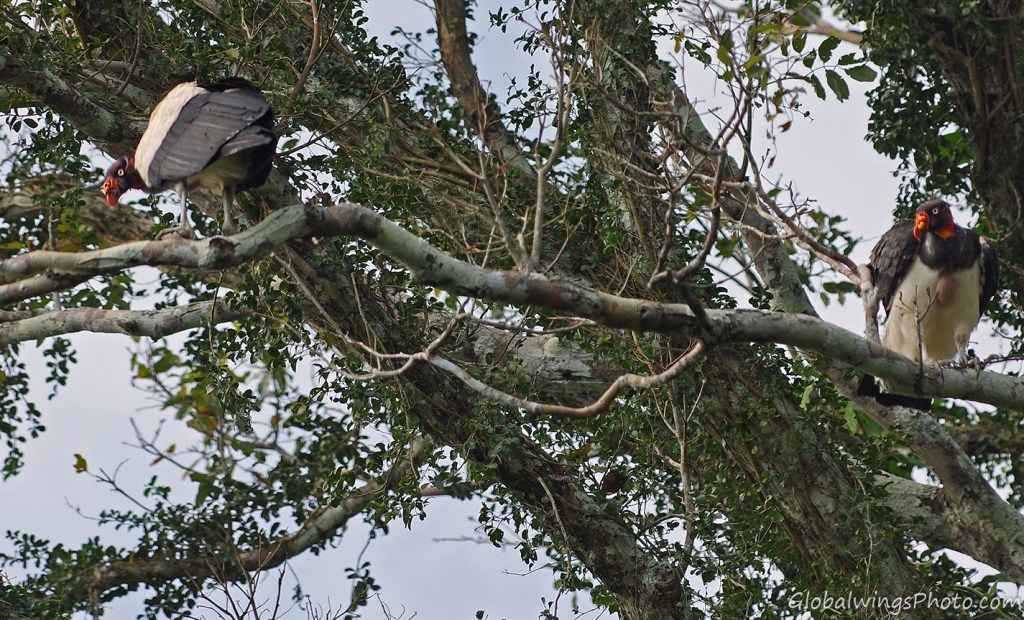
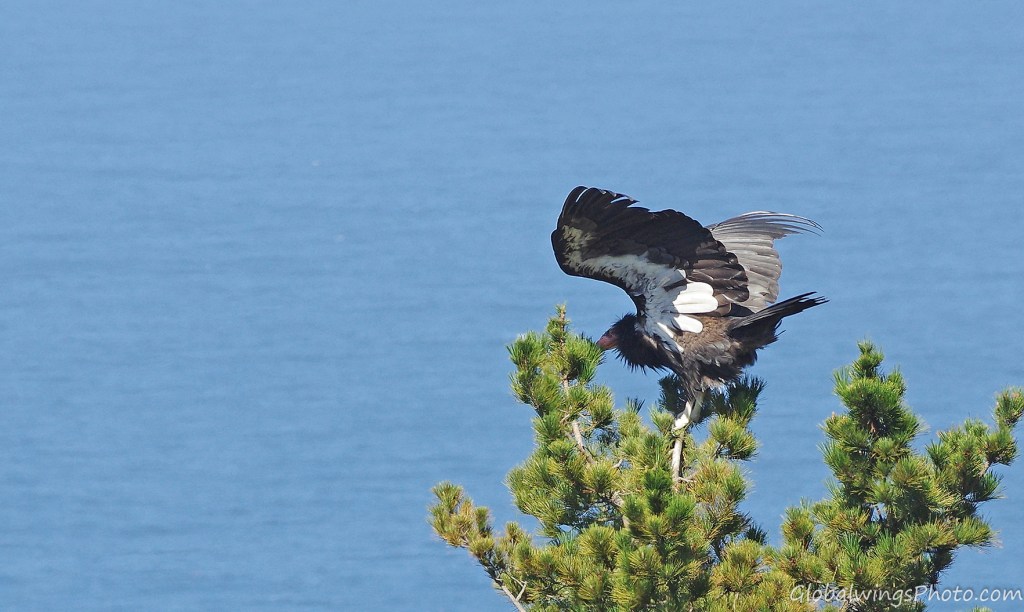
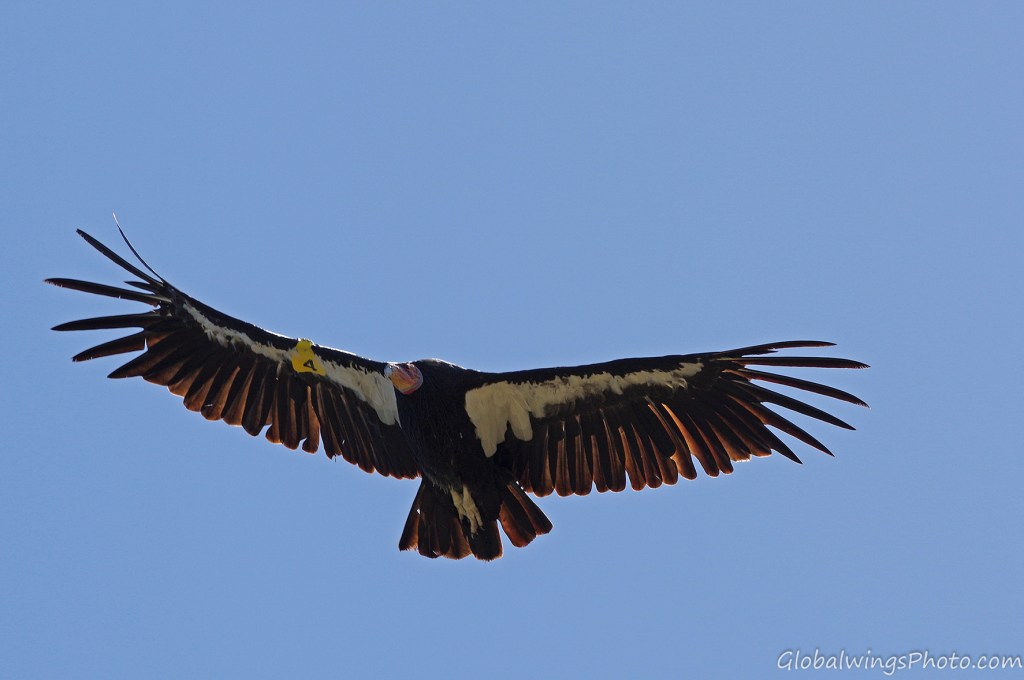
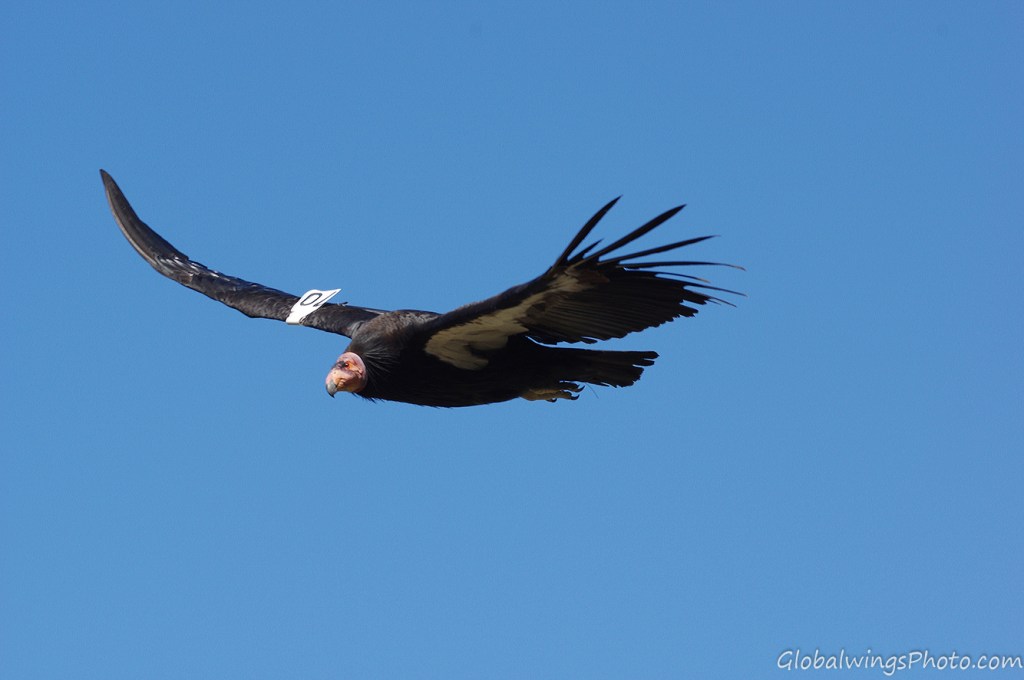
The majestic California Condor (Photos 15-17) is somewhat smaller that its Andean cousin, the adult black like it, but red-headed. The juvenile is uniformly brownish (Photo 18). It almost became extinct during the 1980’s but seem to have been saved through that all wild condors were caught and brought to two Californian zoos to be the foundation of a breeding program. Many have been re-introduced into the wild, where there are 93 condors today. Most of them are in California, where I photographed the Big Sur flock in the San Francisco area. The Red List Status (RLS) is CR and thus its future still uncertain. The breeding program is not yet sustainable and environmental threats are increasing such as droughts and wildfires.
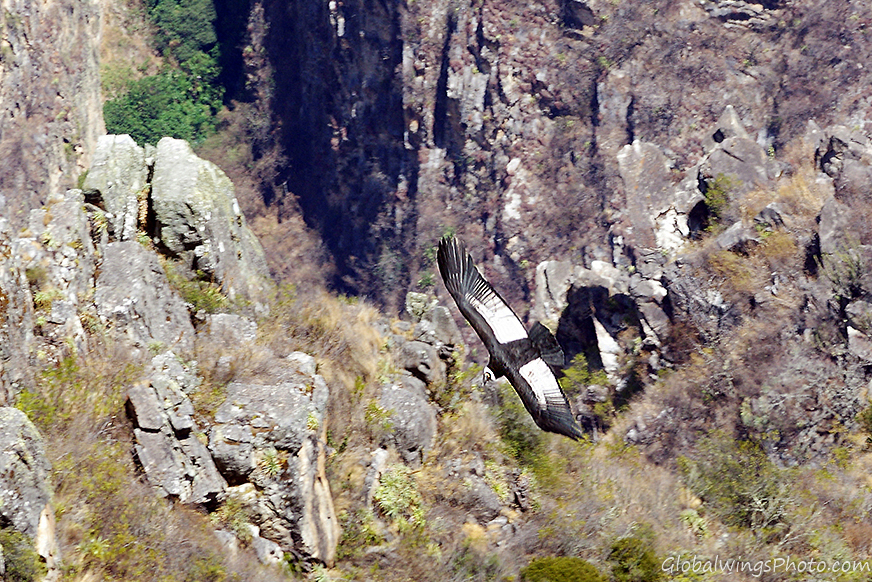
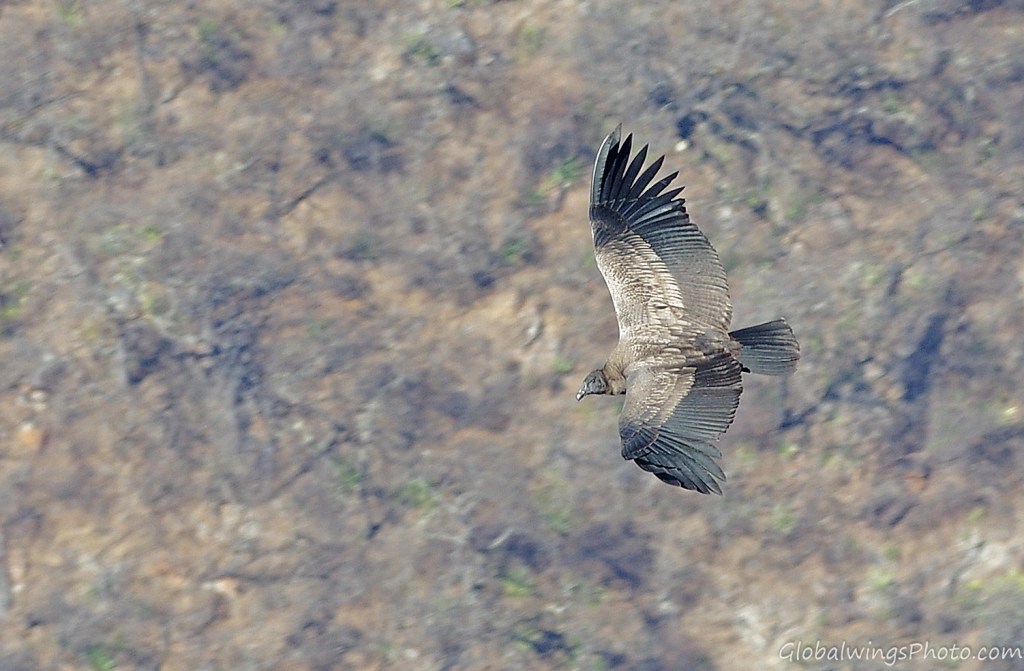
The Andean Condor is the world’s largest vulture and raptor. To experience it, you need to go to certain places in the Andes, for example the ‘Condor Valley’ in Peru close to Limatambo, where I photographed it. It is hard to miss, when it comes gliding along a mountain range, an adult (Photo 19) or a juvenile (Photo 20). The RLS is VU and the PS of about 7.000 is decreasing.

 Globalwings Photo