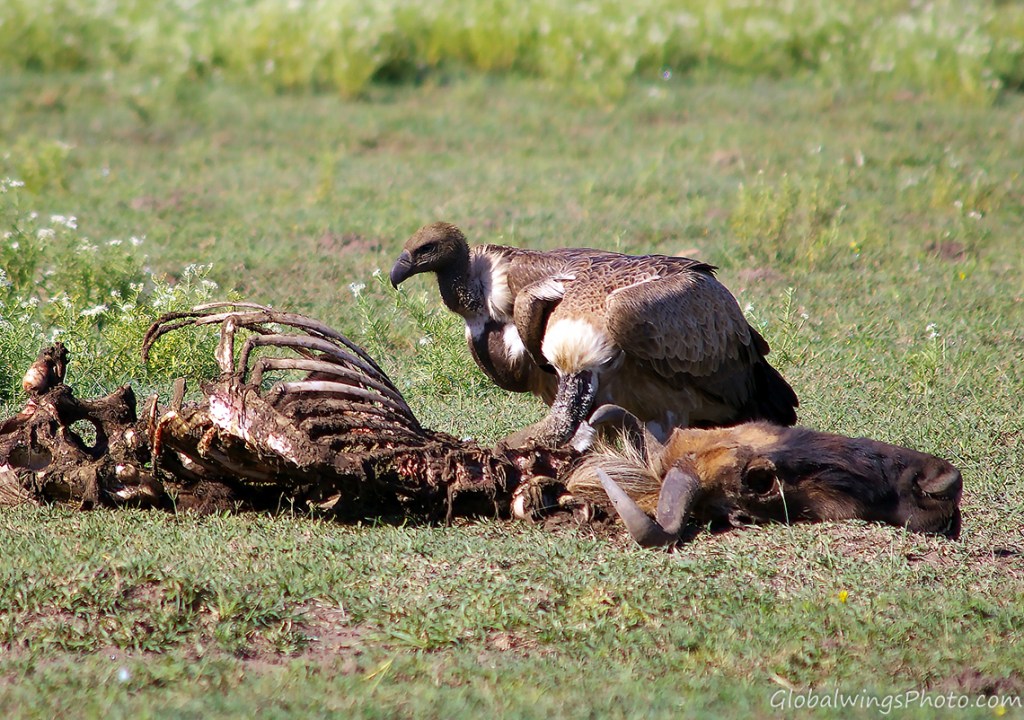
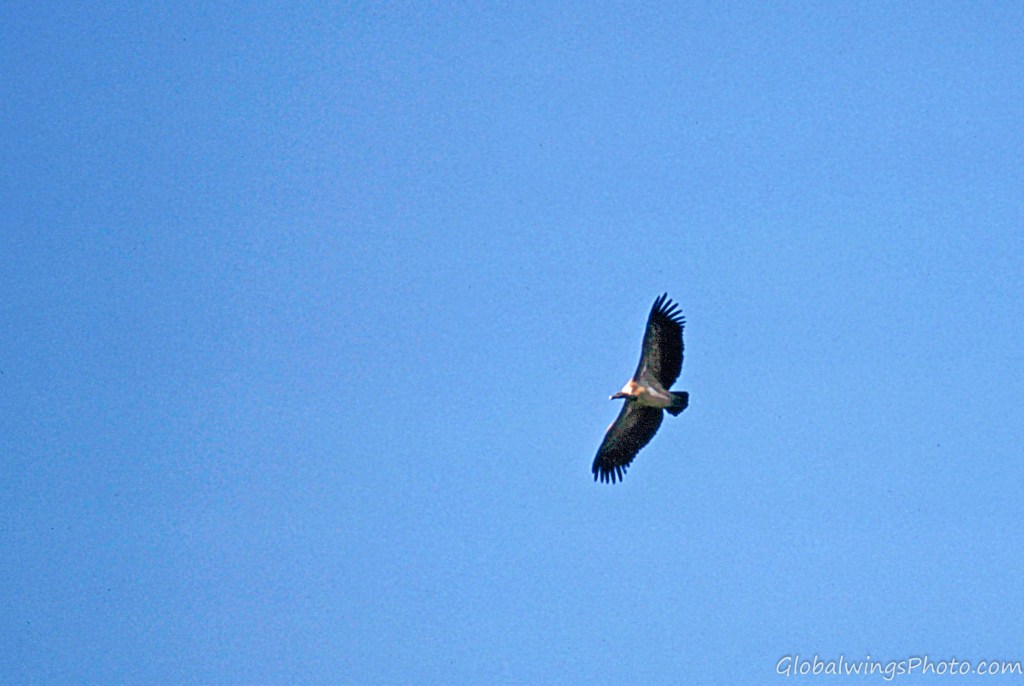
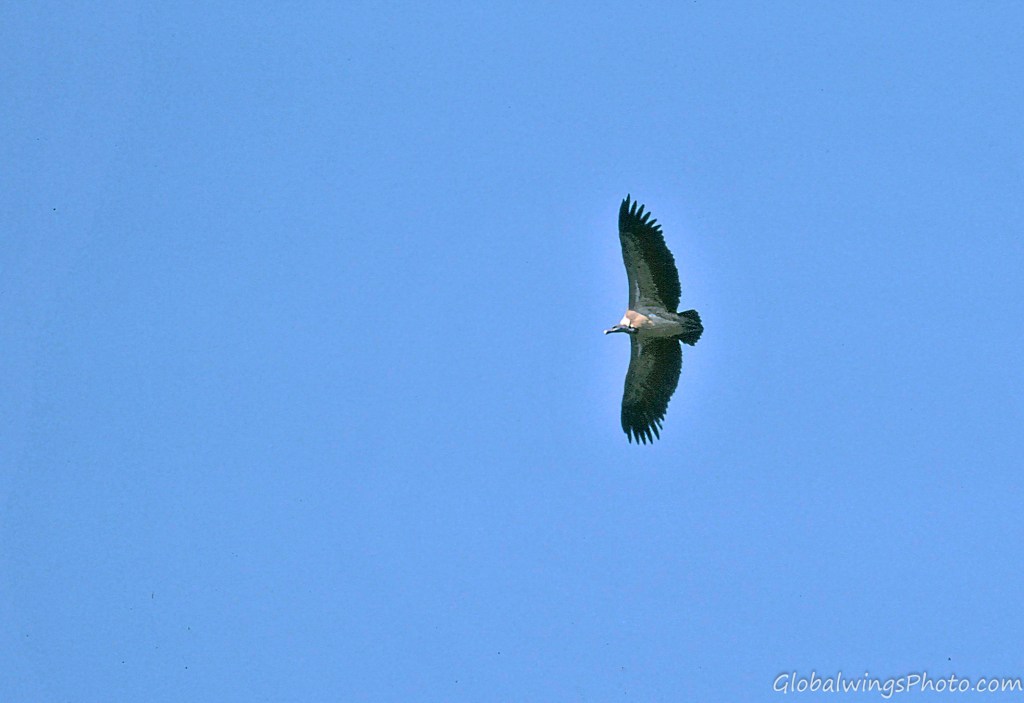
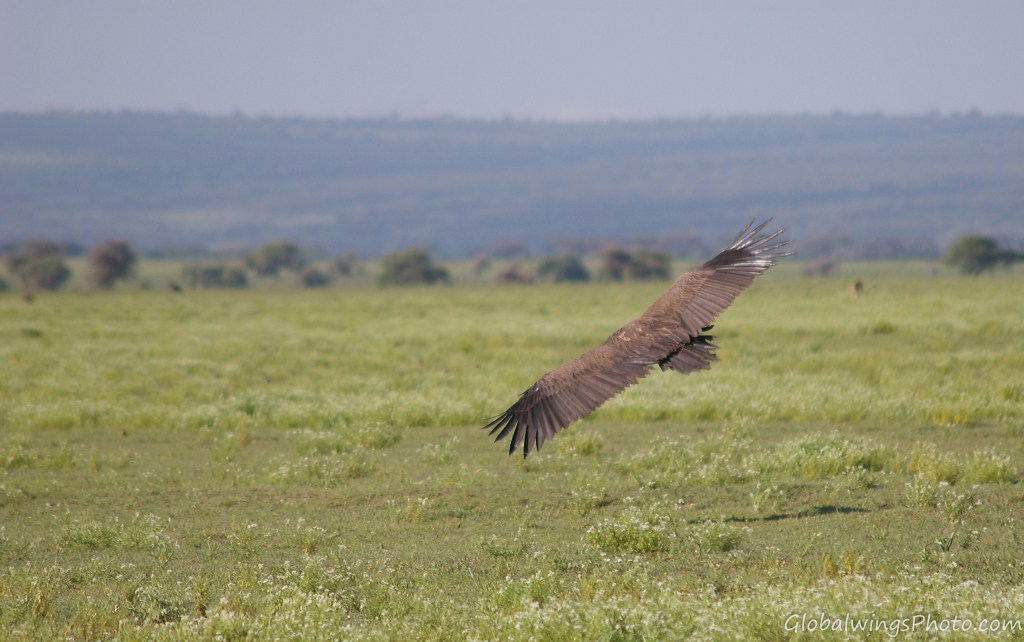
The White-backed Vulture is the most widespread and common old-world vulture in Africa. The uniform brown adults, having pale underwing coverts that contrast with blackish remiges and brown body, are usually easy to identify (Photo 36). Immatures are tougher, especially to distinguish from Ruppels Vulture. The bird on Photo 37 is probably a sub-adult White-backed vulture due to less contrast between wing-coverts and remiges plus one whitish band compared to 2 or 3. The RLS is CR and the PS is 270,000.
The adult Indian Vulture and the Slender-billed Vulture are rather similar but can be separated by the thinner body, all-black longer neck and pale bill tip of the latter (Photos 38 vs. 39). Moreover, these two species have non-overlapping distribution ranges. The Indian Vulture is found only to the south of the Ganges and breeds on cliffs, while the Slender-billed Vulture is native to sub-Himalayan regions as well as Southeast Asia and nests in trees. The juvenile Indian Vulture is mostly pale, which contrasts with the dark remiges and tail (Photo 40). The RLS of this vulture is CR, the PS 30,000 mature individuals and decreasing. It has suffered a 97-99% population decrease due to poisoning caused by diclofenac. It is hoped that captive-bred birds will be released to the wild when the environment is clear of this drug. The RLS of the Slender-billed Vulture is CR since 2002, and the PS is decreasing, especially on the Indian subcontinent.
I have only seen the very pale Cape Vulture in the Southern part of South Africa but did not manage to photograph it. As a griffon vulture it is most similar to the juvenile Indian Vulture, belonging to the same clade as this vulture and the Slender-billed vulture. The RLS is VU and the RS is 9.600-12.800, decreasing in South Africa.
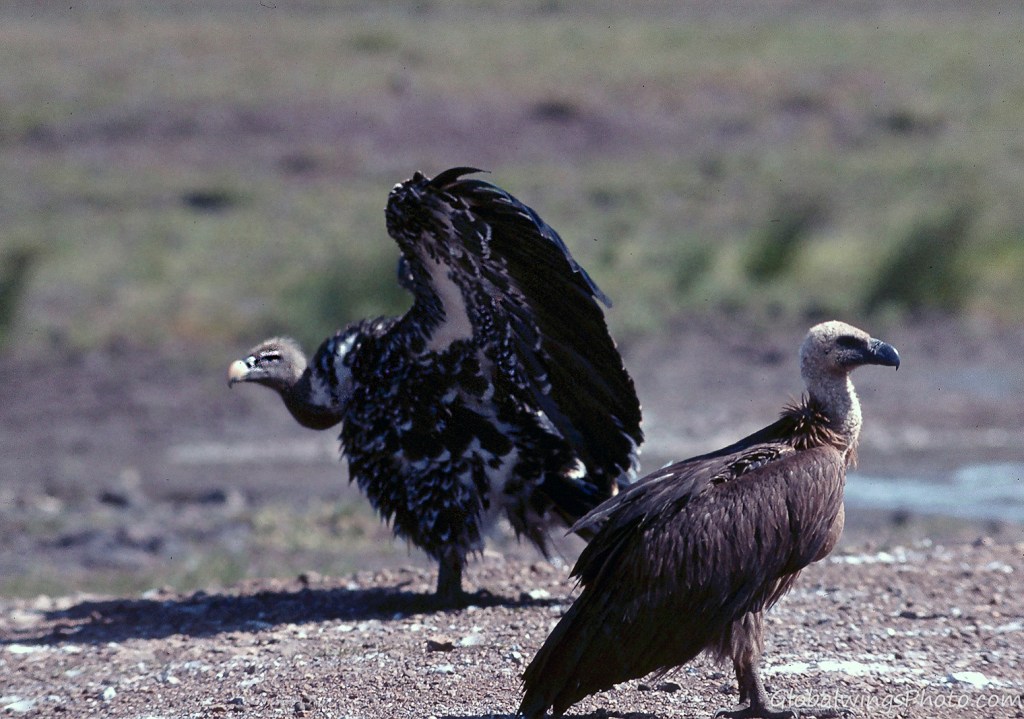
The adult Ruppell’s Vulture is typical with its cream-scaled upper-wing, scaled body and 2-3 broken bars on wing-linings and the juvenile with its brown body, pale neck and head, and dark bill (Photo 41). The RLS is CR, while the PS was about 30,000 individuals at the beginning of the 1990s.


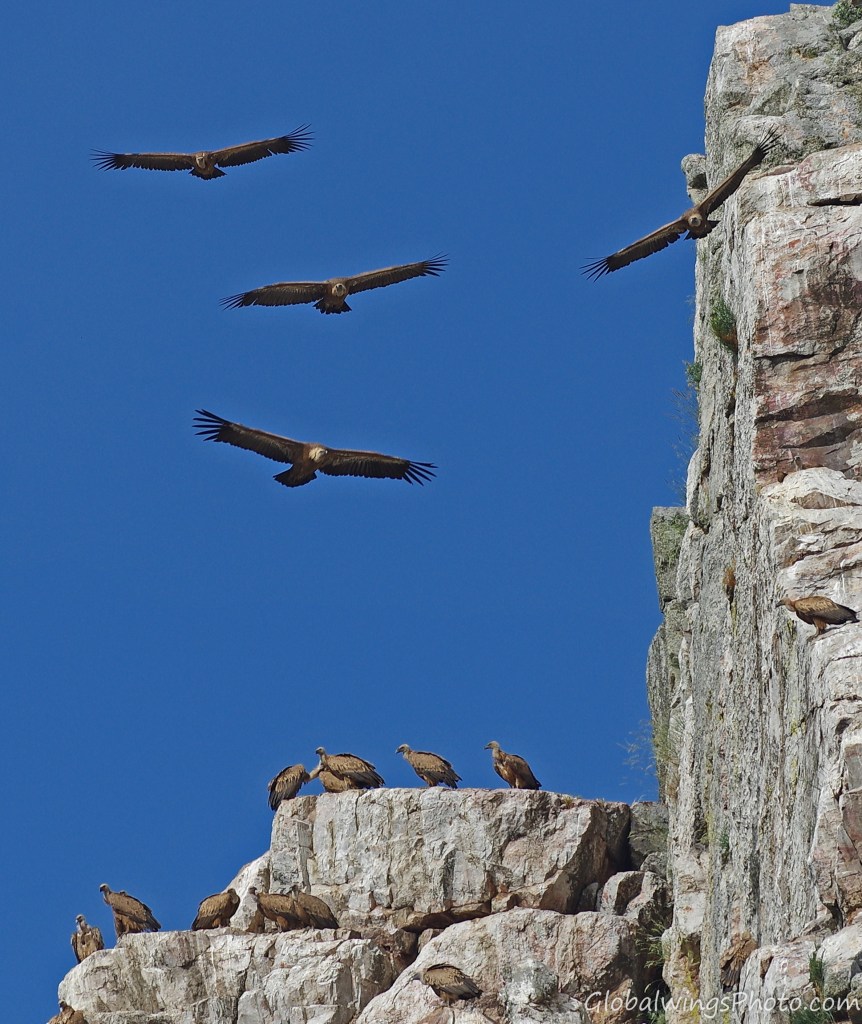
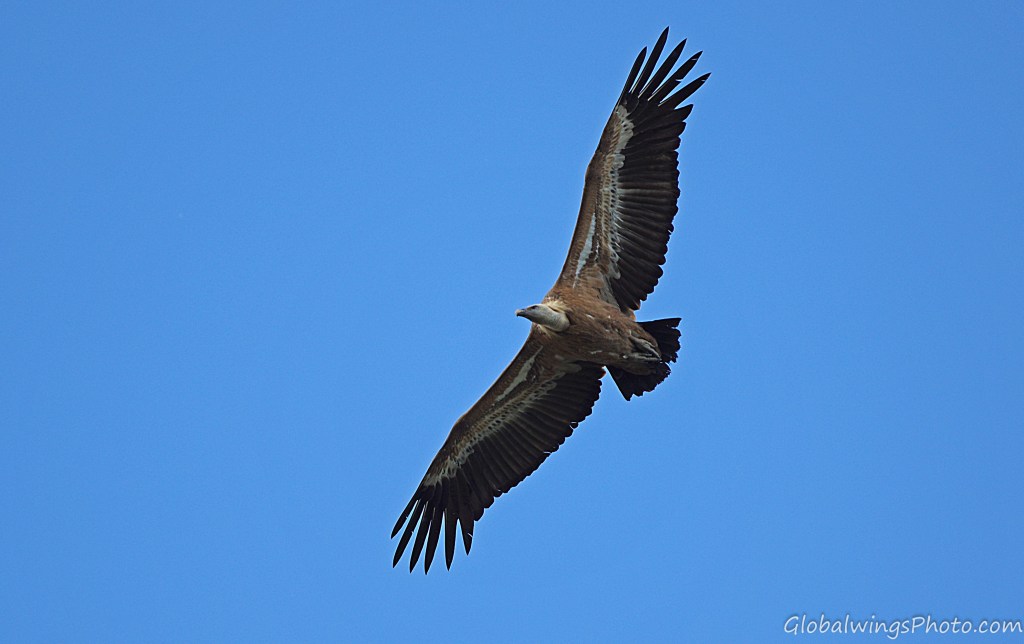
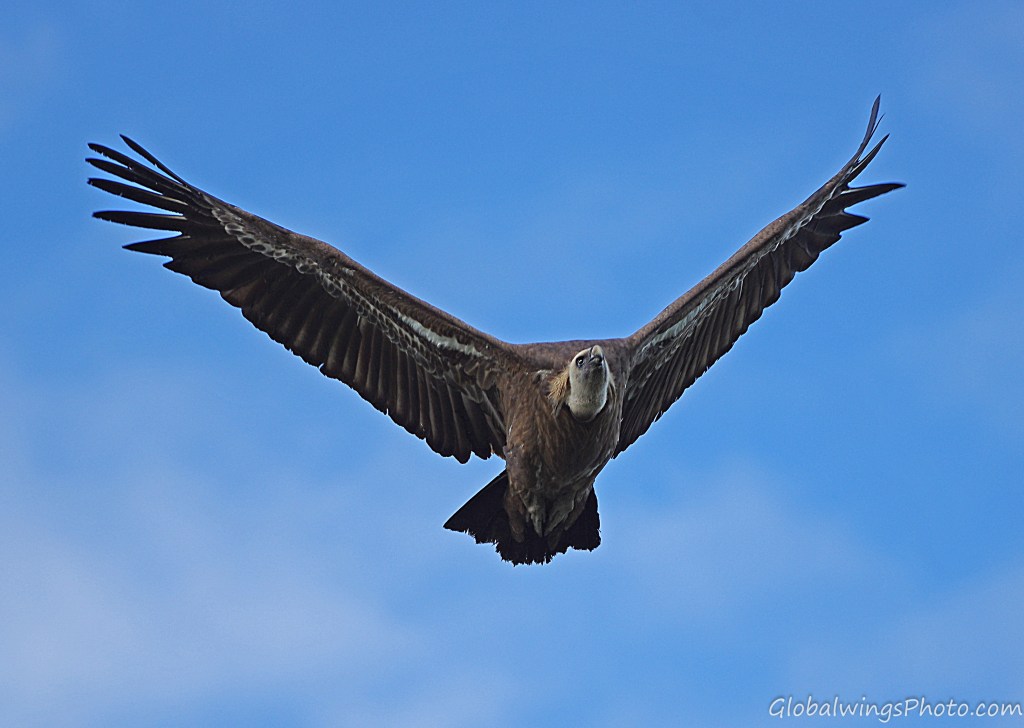
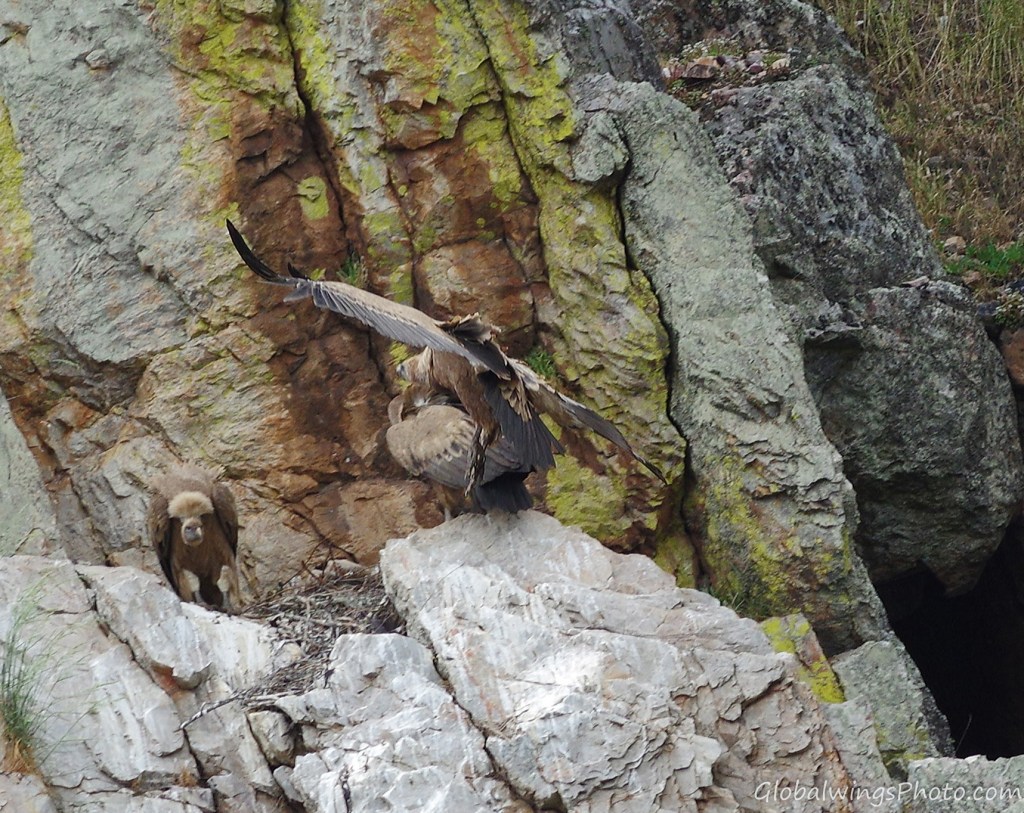
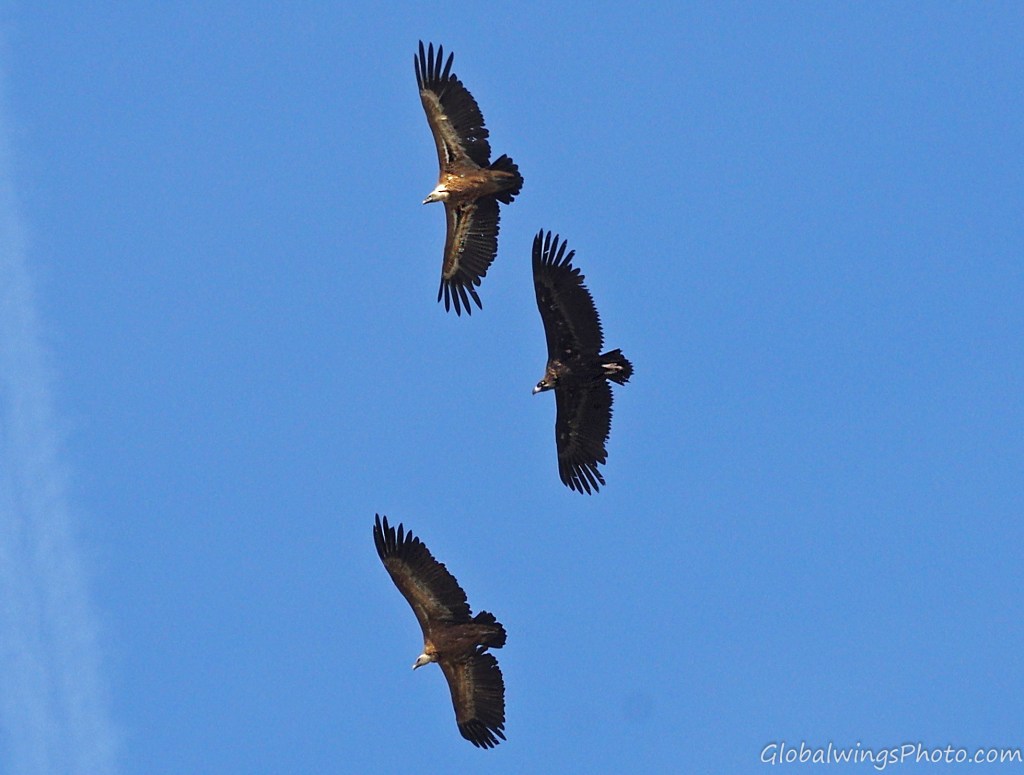
The Griffon Vulture is by far the most common vulture in Europe, even being a few observations in Sweden. I have watched it in Spain, Greece, Turkey, India, and Nepal. A good place to watch it and other raptors in Europe is in the Spanish national park Monfrague in Extremadura (Photos 42-45). In Europe it is typical, whileit could be hard to distinguish from the Himalayan Griffon in Asia, especially at a distance. The other Asian griffon vultures are distinctly smaller. The RLS is LC and the PS is 648,000-688,000 and increasing, of while the European population is 64.800 to 68.800.
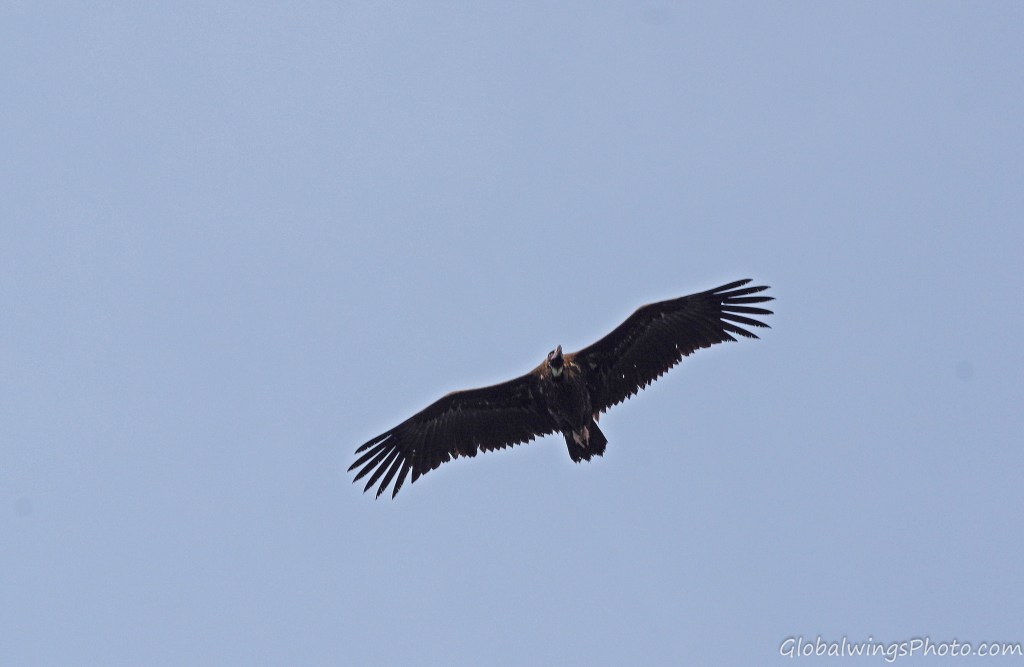
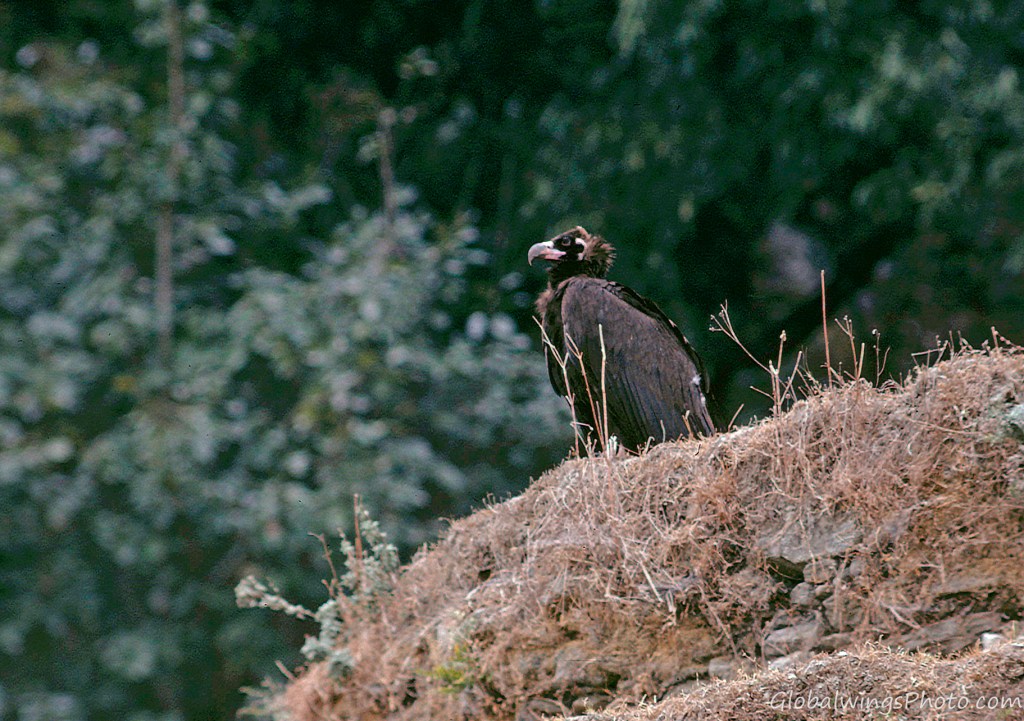
The Cinereous Vulture is the largest old-world vulture, closely followed by the Himalayan Griffon. This all-black adult is mostly typical and different than the Griffon Vulture (Photos 46-47). But in bad light, it can be hard to distinguish from sub-adult Himalayan Griffons in Asia, despite being generally darker than the mostly pale brown latter vulture. The juvenile does not normally cause any identification problems due to its characteristic head (Photo 48). The RLS is NT and the PS is decreasing.
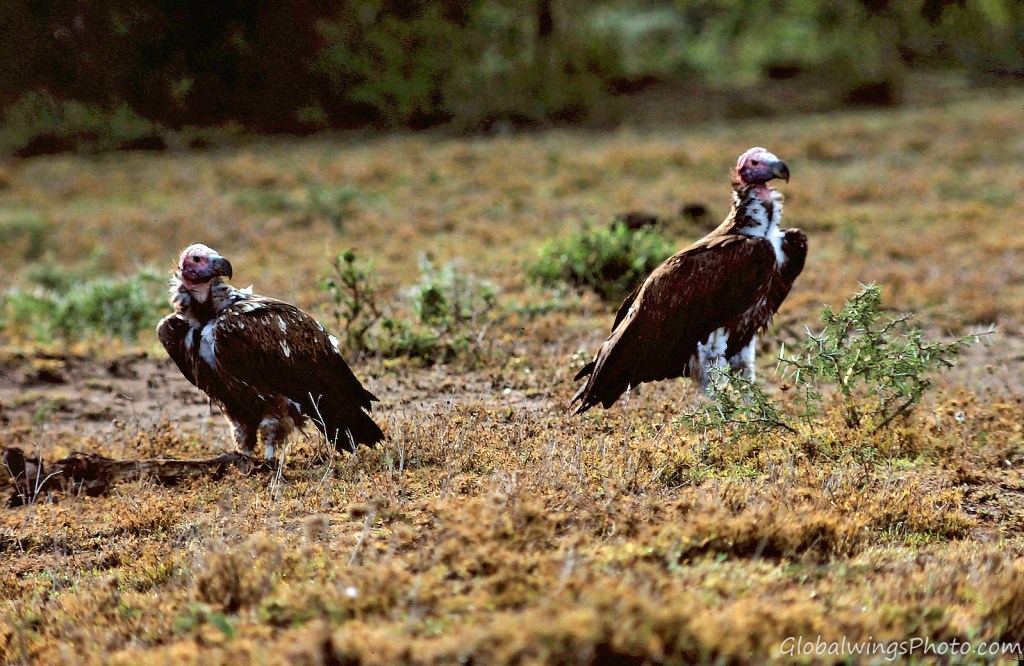
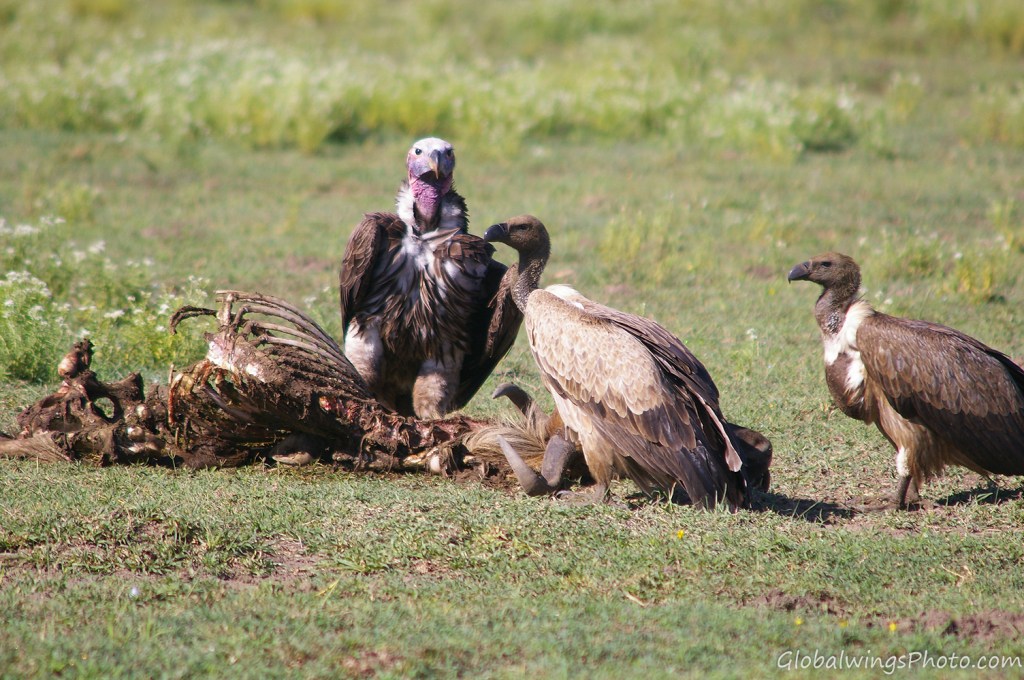
The Lappet-faced Vulture is large, being somewhat smaller than the Himalayan Griffon. In flight, the underside is similar to the Cinereous Vulture but has pale lesser wing-coverts, ’trousers’ and head, while the upper parts are uniformly dark (Photos 49-50). On carcasses, it is very typical due to its red head and bill (Photo 51), which it dominates (Photo 52). The RLS is EN and the PS is about 8,500 individuals, at least 8,000 individuals in Africa and about 500 individuals in the Middle East.

 Globalwings Photo