The White-tailed eagles presented here have all been photographed in South Sweden during the autumn. The major sources for sorting these pictures of autumn plumages into different age groups are based on Dick Forsman’s book ‘Flight Identification of Raptors of Europe, North Africa and the Middle East’ (2016) and Benny Génsböl’s book ’Rovfåglar i Europa’ (2006). Four juvenile and post-juvenile plumages are distinguished. Due to complexity of the adult plumages, they are divided into three groups: one fully adult plumage group and two groups of younger adults in the fifth to seventh years old range.
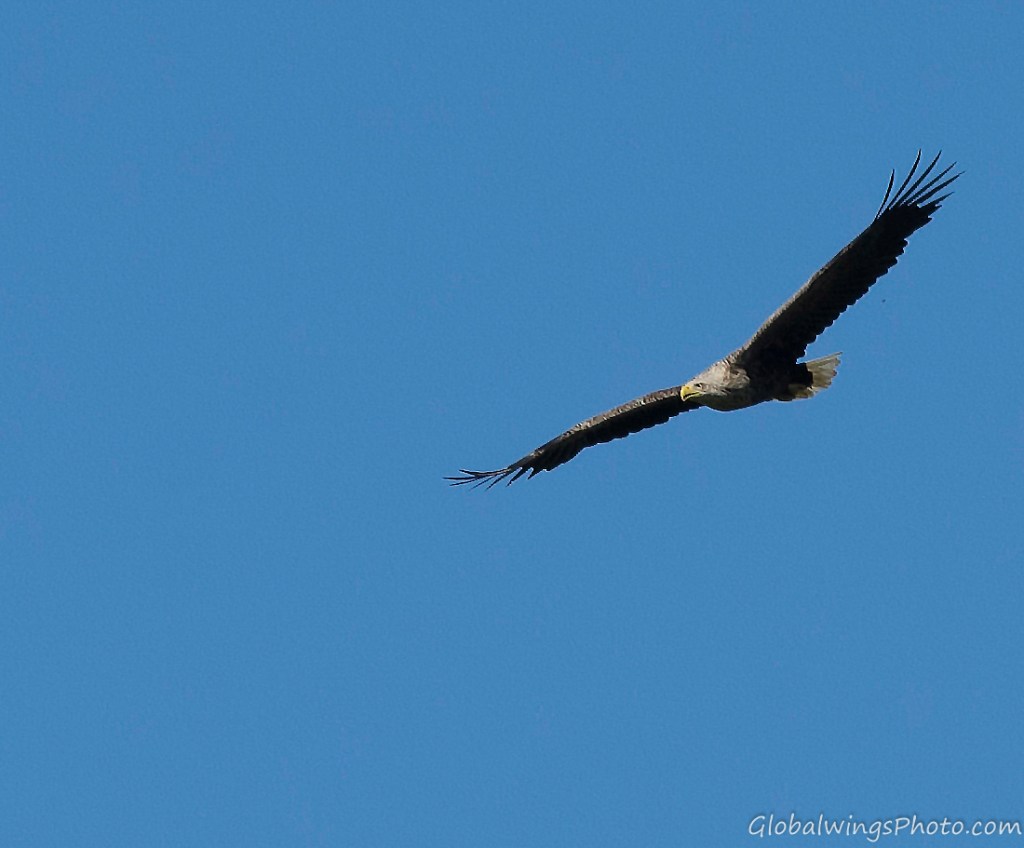
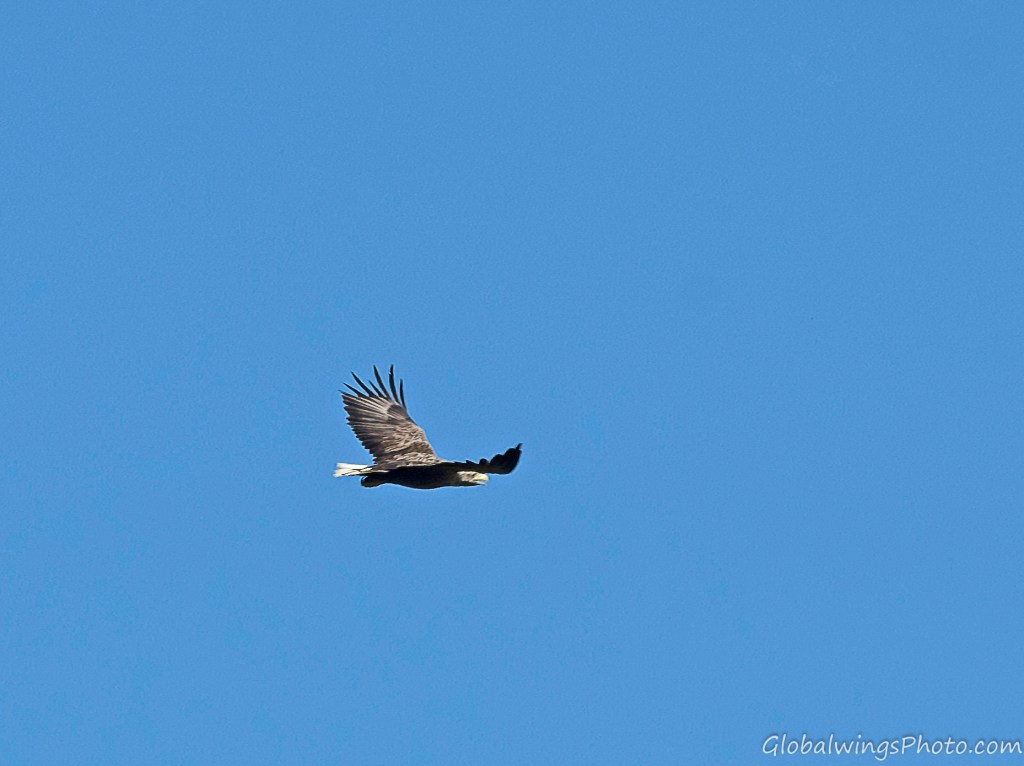
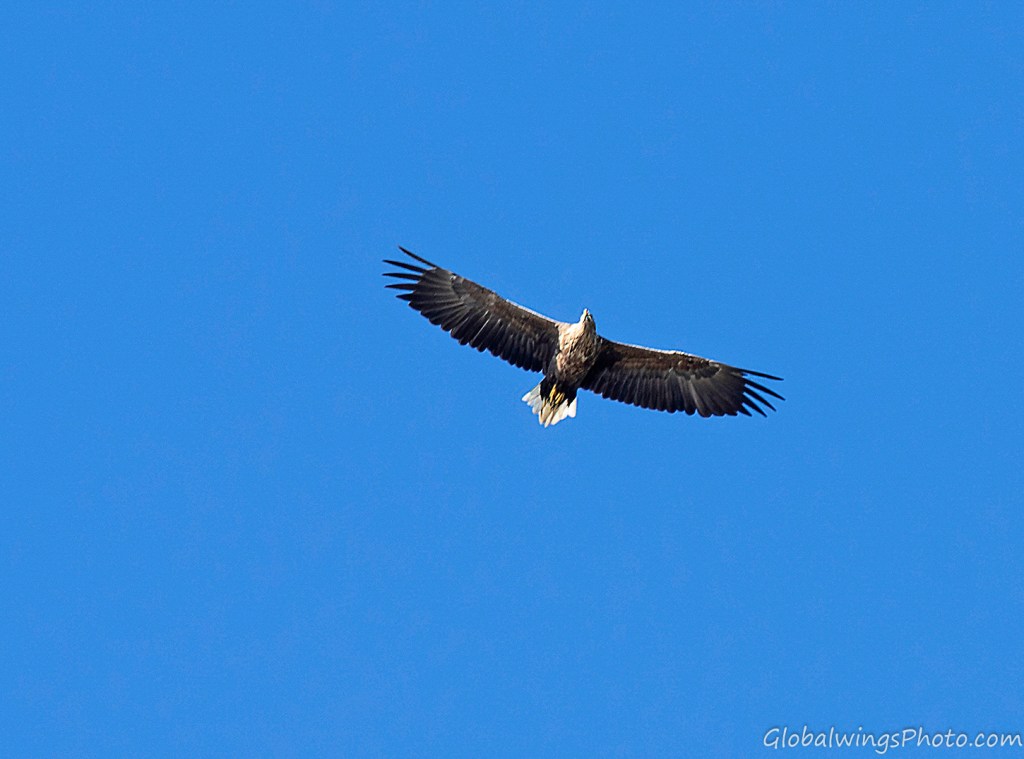
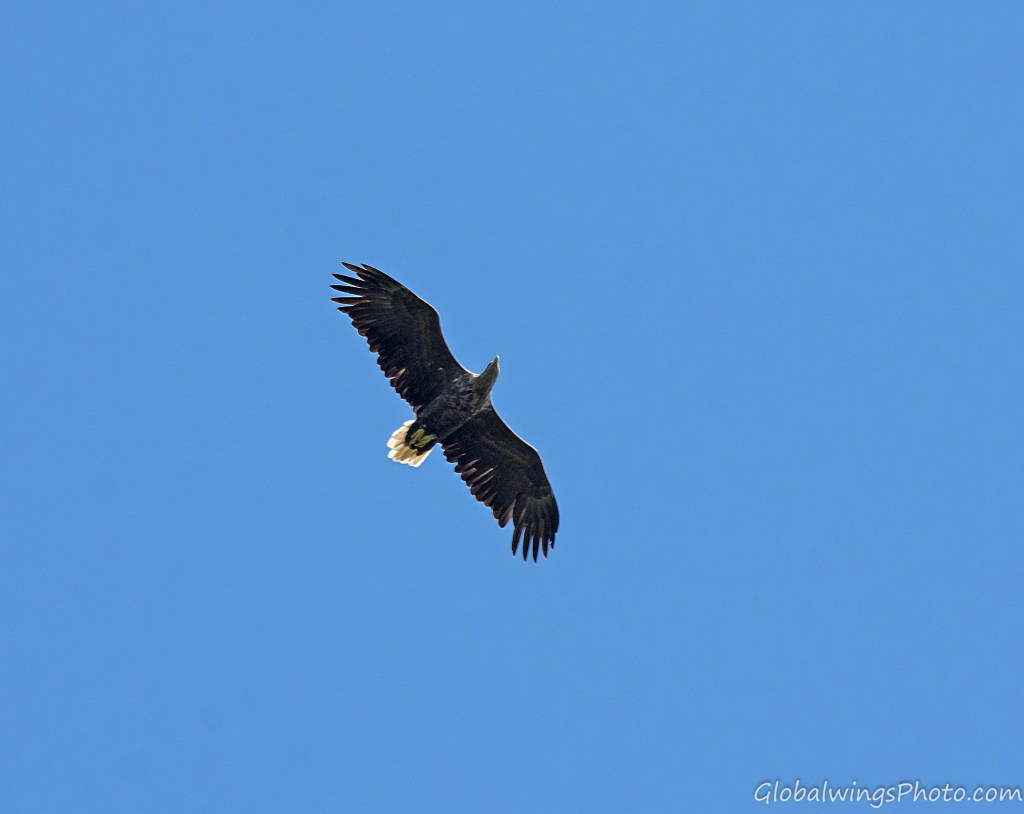
Fully adult plumage: Photos 1-2
A typical old adult White-tailed eagle is easy to identify due to the pale beige head and white tail contrasting with the rest of brown underparts, and an upperpart of light-brown wing-coverts and dark-brown or blackish remiges. The bill is pale and the iris is yellowish with a dark pupil, giving the eye a light appearance. This very light plumage is usually fully developed when the eagle is between 8 and 10 years old. However, as is elaborated on below, this is an older adult, since the first adult plumage is present at the age of five to seven.
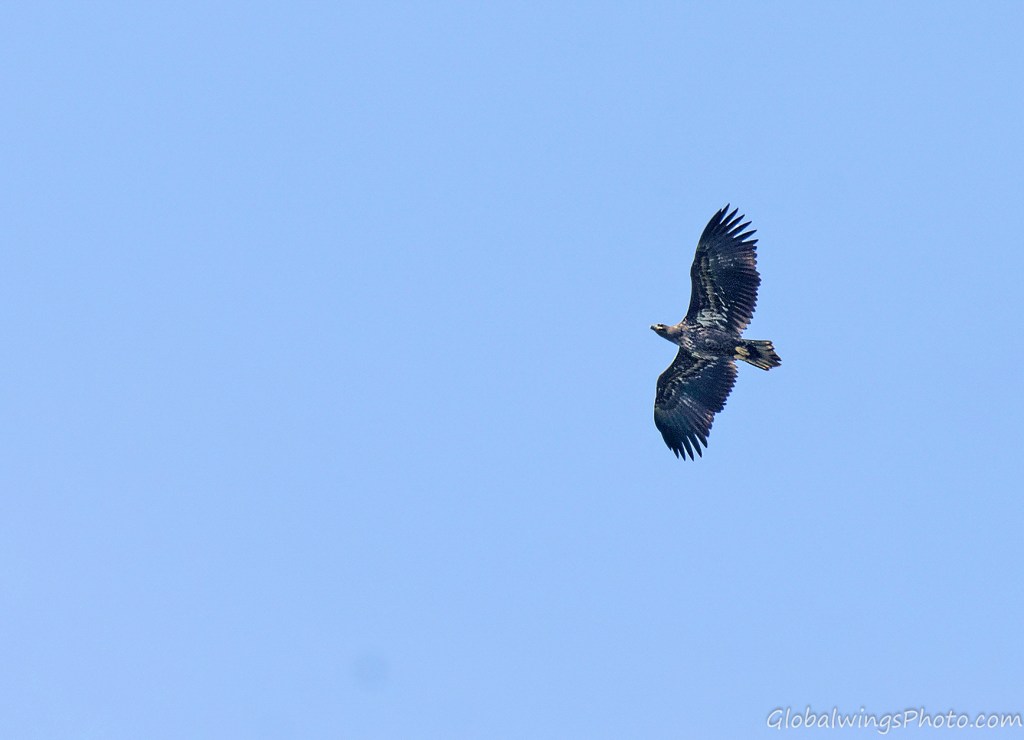
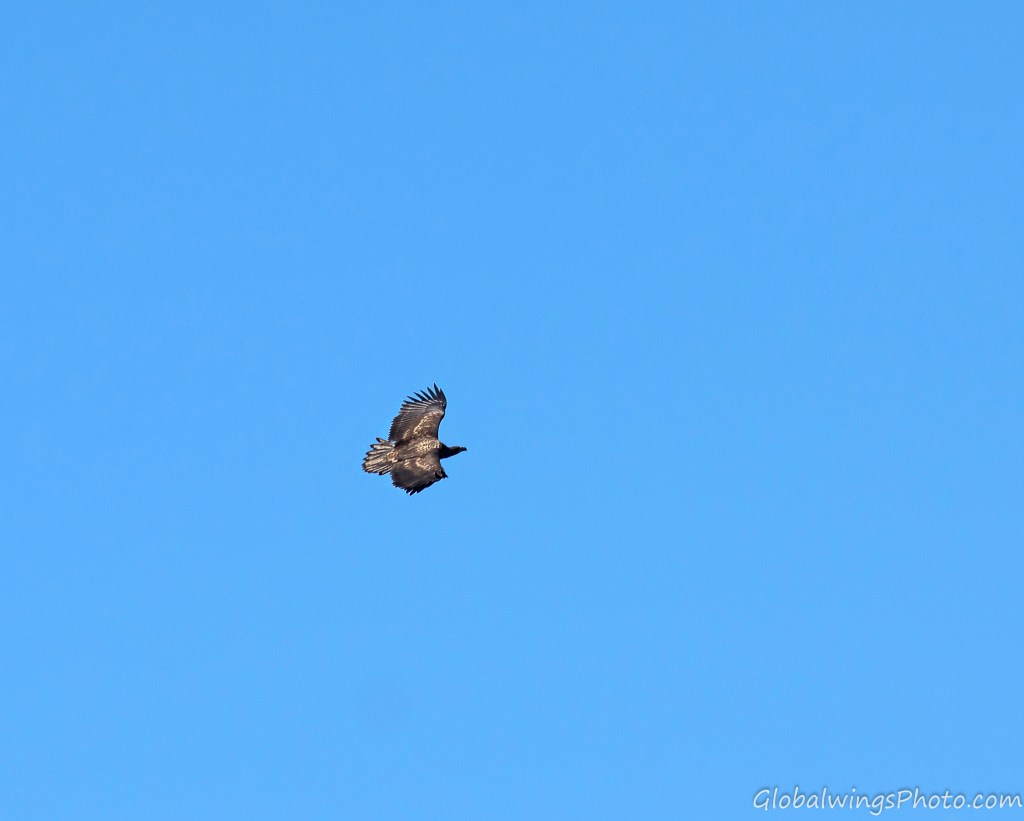
First plumage: Photos 3-6
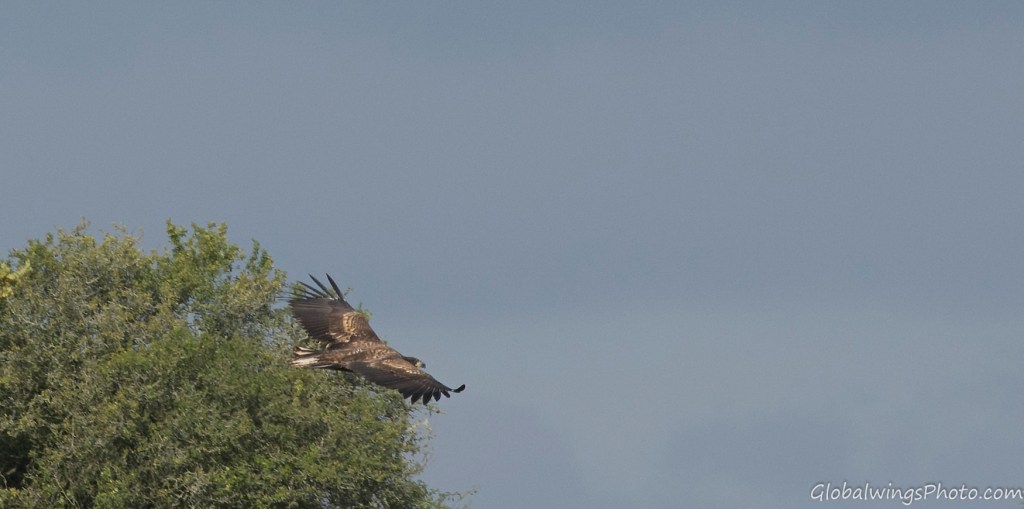
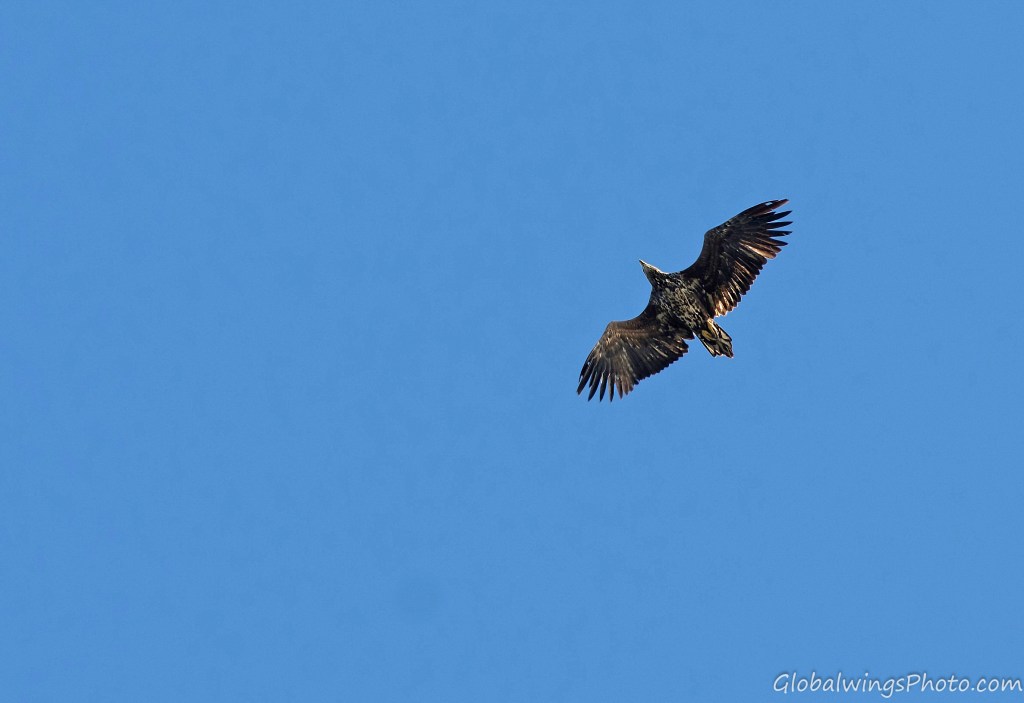
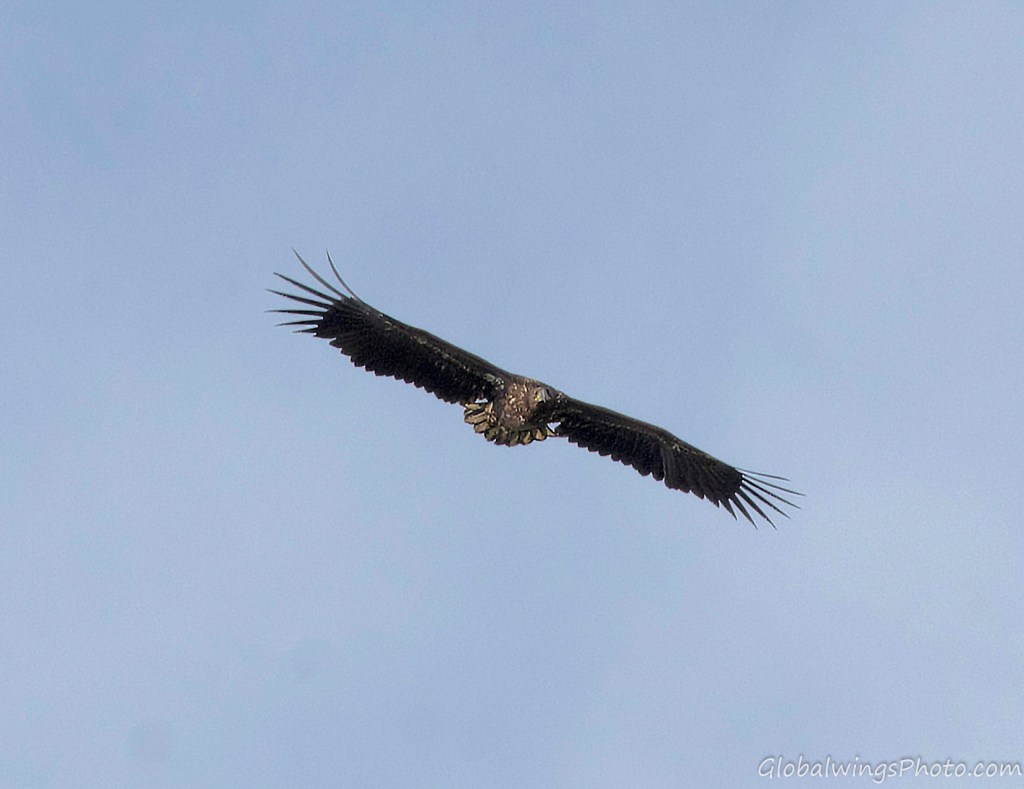
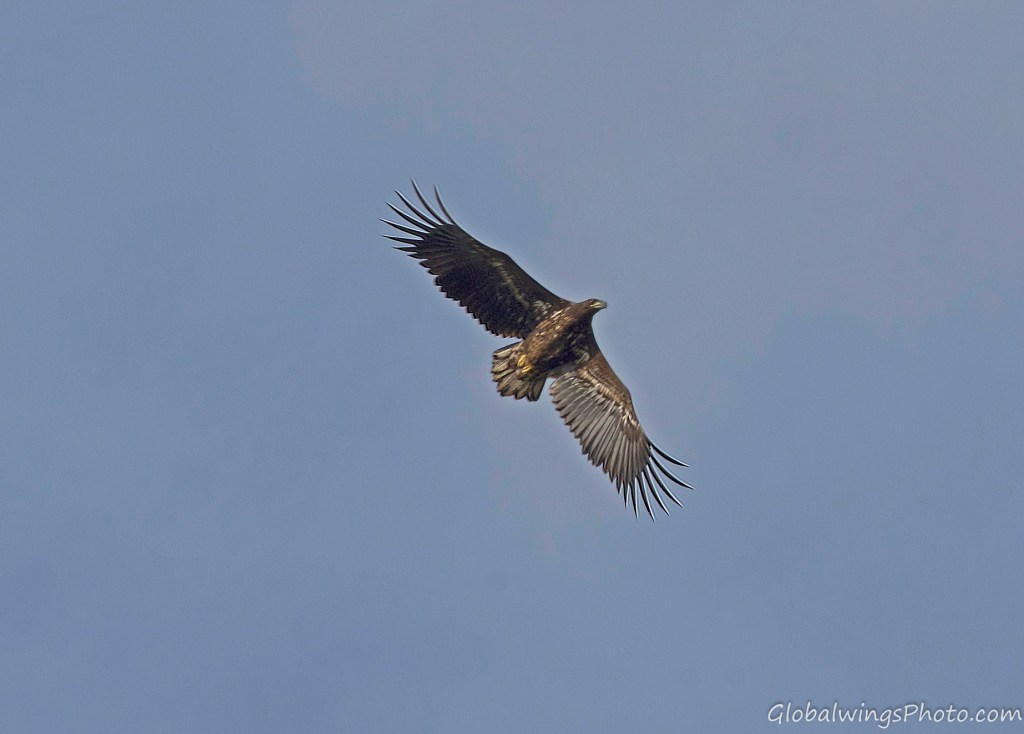
Compared to the adult plumages, the juvenile and post-juvenile birds are more variegated with a dark bill and eye, mostly giving a generally dark-brown appearance. This variegation is illustrated in Photos 3-5 for the underside of a first-year juvenile that has recently flown the nest. This bird is brown with a spotty body, white axillaries, a white band across the median coverts and white tips of the greater secondary coverts. The retrices are light with dark edges. The head is brown inclusive of a dark bill and eye. Also note the pointed juvenile quills and lighter inner secondaries, giving the trailing-edge a saw-toothed appearance. The upperparts are more brownish, but with lighter retrices, median secondary coverts, mantle and scapulars (Photo 6).


Second plumage: Photos 7-8
The plumage of the two-year old eagle has not changed much compared to the first one. As seen in Photo 7, the upperparts have become somewhat more variegated, especially the body, and the retrices. The same goes for the underparts with the lighter body and more varied retrices (Photo 8).
Third plumage: Photos 9-12
The underside of the third plumage is rather variable but more generally brownish due to new brown feathers. This is seen in the more irregular trailing-edge, some pointed remiges still remaining, which contrast to the new and larger brown quills. The axillaries are still pale but more variegated due to some pale feathers have been replaced by brown ones. The median secondary coverts are pale. For some birds, the body has turned almost wholly brown, now being a mixture of dark and light brown feathers. The head and eye are still brown and the bill lighter. Most of the tail is white and the trailing edge now consists of the larger and brown adult quills, but which are rather variegated due to the whitish bases. The eagle on Photo 12 looks odd due to also having a lot of white at the bases of the primaries, which almost forms an irregular band at the middle of the wing.


Fourth plumage: Photos 13-14
No pointed juvenile remiges remain in the fourth plumage, which is then closer to the adult plumage and can therefore be hard to distinguish from adults. On average, head and breast are lighter than the third plumage but darker than the adult plumage. There are also more white markings on the underbody and underwing compared to the third post-juvenile plumage but more than in the adult plumage. Some dark edges still remain on the tail feathers.
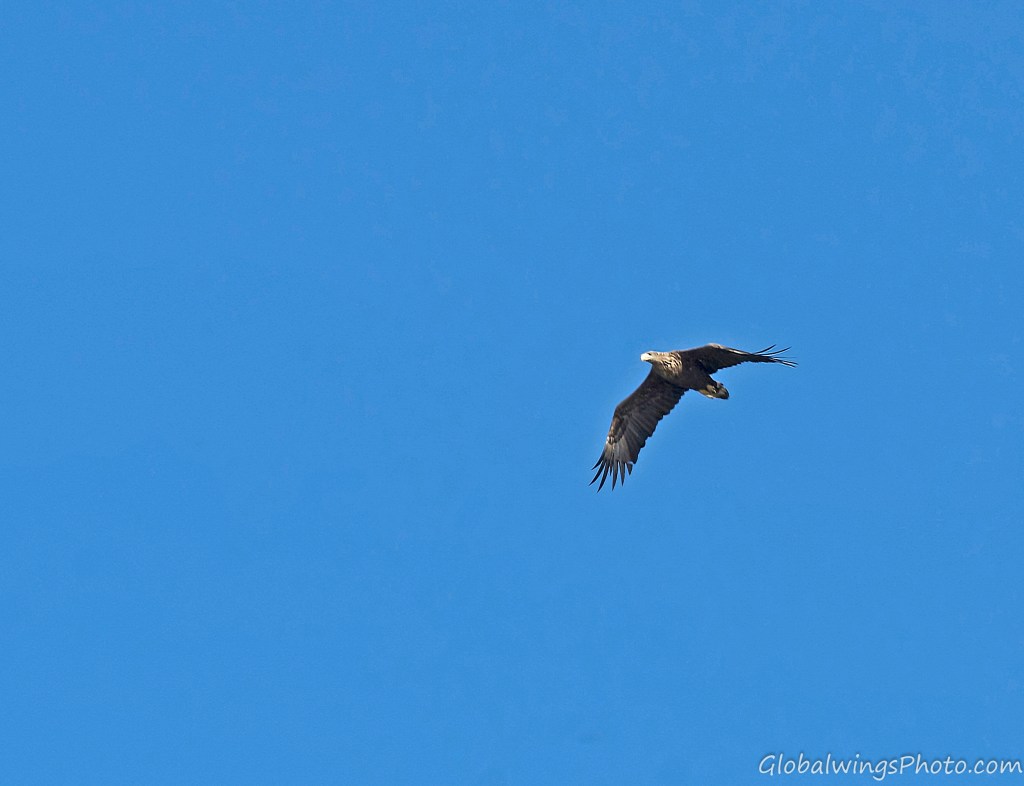
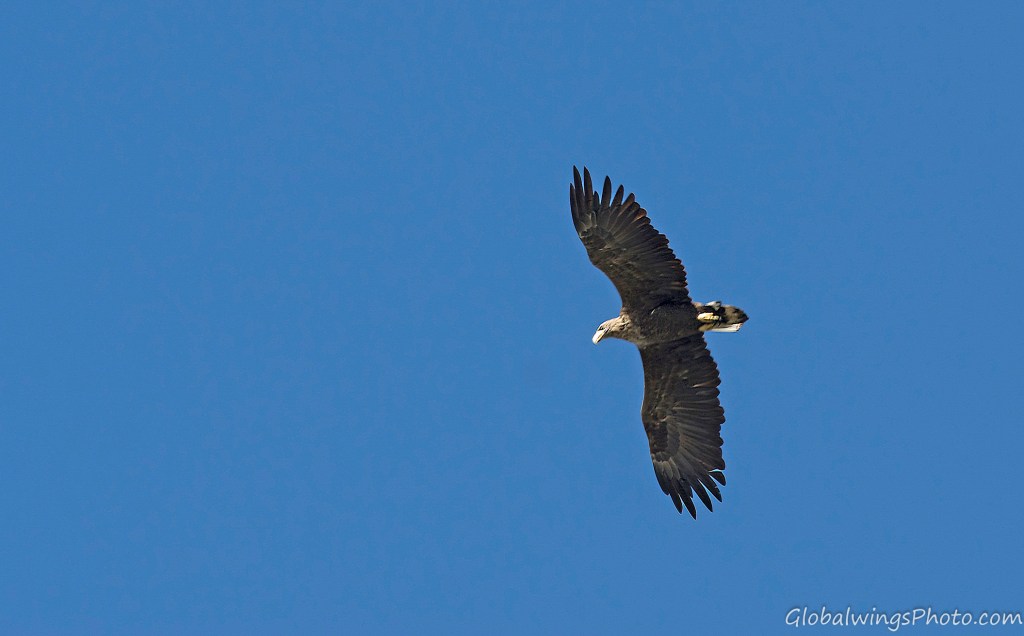
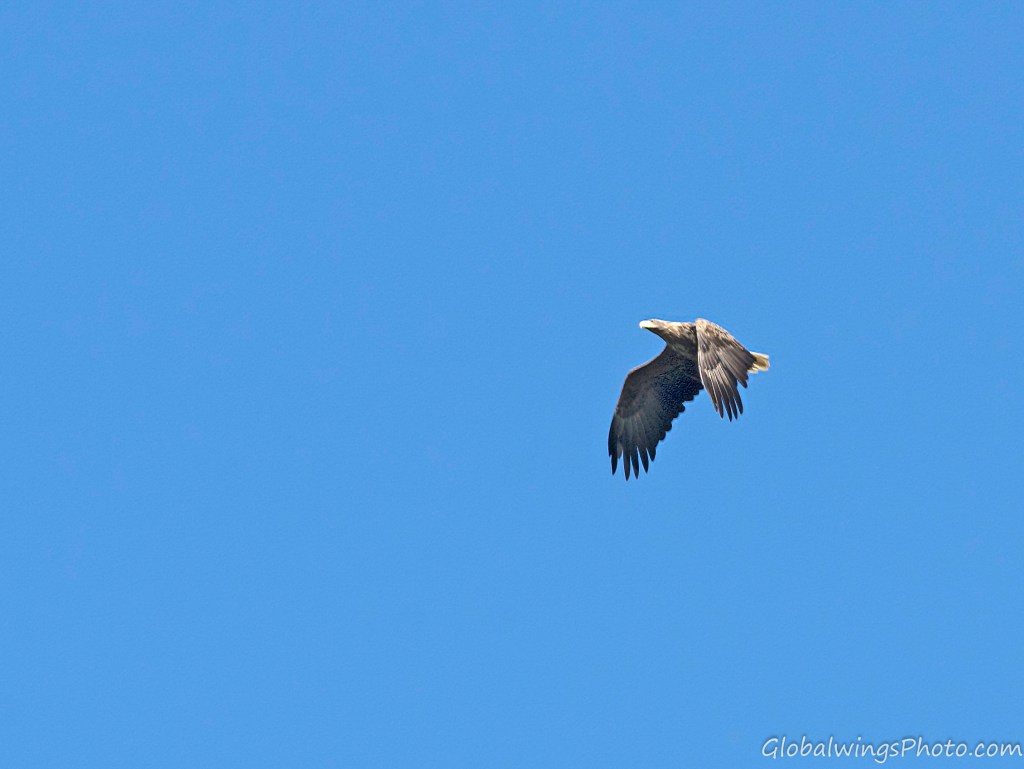
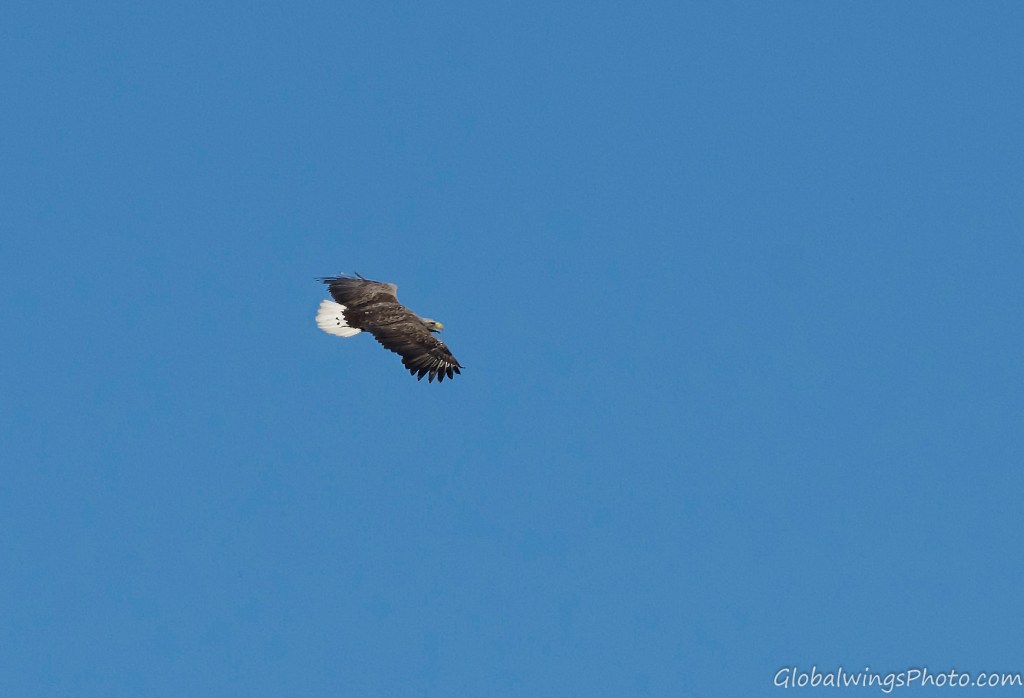
Range of fifth to seventh years old: Photos 15-20
Since the moulting of individual young adults varies a lot, I collapse the photos into one class called the range of fifth to seven years old. Compared to the fourth plumage, the major differences are the pale bill together with the lighter head and chest, the latter mainly due to white streaks. The tail is also wholly white, and the underparts are mostly brown. Based on my photos, these young adults are divided into one darker and one lighter group. The head and underside of the former group are almost entirely brown (Photos 15-16), while those parts of the latter group are streaked and paler (Photos 17-20). The upper wing secondary coverts of the darker group are not yet light brown but uniformly brown (Photo 16) and spotty in the lighter group (Photo 20).


 Globalwings Photo